A rebuttal to Wale Adewale’s faulting of Ambassador Jimoh Ibrahim’s submission.
By Maroof Asudemade
Wale O. B. Adewale’s attempt to portray Nigeria’s Permanent Representative to the United Nations, Ambassador Jimoh Ibrahim, as ignorant of international law succeeds only in exposing a fundamental misunderstanding of the distinction between international scrutiny and international investigation. The distinction is not semantic; it is legal.
Wale Adewale, a political scientist, wrote a piece to fault Ambassador Jimoh Ibrahim’s submission that the United Nations would not interfere in any nation’s domestic affairs.
A careful reading of Ambassador Jimoh Ibrahim’s position shows that he did not argue that the United Nations cannot comment on, condemn or express concern over school abductions in Nigeria. What he rejected was Governor Seyi Makinde’s call for the United Nations to conduct an independent investigation into the Oriire school abduction. The call is a proposition that raises significant constitutional and international law questions. That distinction is precisely where Wale Adewale’s argument collapses.
No one disputes that various United Nations organs have, over the years, examined Nigeria’s human rights record. Following the Chibok abduction, treaty bodies, Special Rapporteurs, independent experts and the Office of the High Commissioner for Human Rights issued reports, recommendations and observations. Similar statements followed the Kankara, Jangebe and other school attacks. But none of those mechanisms exercised criminal investigative powers inside Nigeria. None deployed investigators with powers to compel witnesses. None seized evidence. None interrogated suspects. None prosecuted offenders. None displaced Nigerian security agencies as the lawful investigators of crimes committed within Nigeria.
That is because the United Nations does not possess a general police jurisdiction over sovereign states. This is the legal reality that Wale Adewale deliberately blurs.
International human rights mechanisms perform oversight functions. They collect information, receive submissions, assess compliance with treaty obligations and make recommendations. They may criticise governments. They may even conclude that treaty obligations have been breached. But that is fundamentally different from conducting an independent criminal investigation into a domestic security incident.
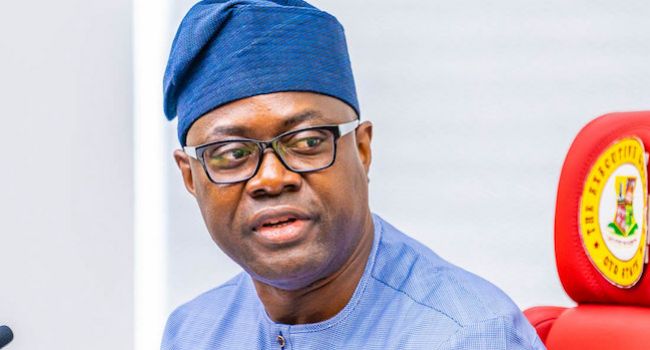
Governor Makinde did not merely ask the United Nations to observe developments or issue a statement of concern. He publicly requested an independent international inquiry into an ongoing criminal matter occurring within the territory of the Federal Republic of Nigeria. That request raises constitutional issues that Wale Adewale conveniently ignores.
Under Nigeria’s Constitution, foreign affairs and relations with international organisations are matters reserved exclusively for the Federal Government. A state governor neither represents Nigeria internationally nor possesses the authority to invite international investigative bodies to intervene in matters touching on national sovereignty. Whether one agrees with Ambassador Jimoh Ibrahim or not, his response reflected this constitutional reality.
Wale Adewale repeatedly cites Chibok, Kankara and Jangebe as precedents. Yet none of those examples supports his conclusion. The United Nations condemned those attacks. It demanded accountability. It urged better protection of schools. It criticised failures by Nigerian authorities. It examined Nigeria’s compliance with international human rights obligations. What it did not do was establish an international investigative commission with coercive powers operating independently within Nigeria. Those are entirely different legal concepts.
Indeed, if every serious criminal incident automatically entitled international organisations to conduct investigations within sovereign states, national criminal justice systems would become subordinate to external institutions, and it is a proposition neither the United Nations Charter nor international law supports.
International cooperation exists because sovereignty still matters. The United Nations is not a global police force. Its human rights bodies derive authority from treaties voluntarily accepted by states. Their findings carry moral, political and legal significance, but they do not replace domestic institutions responsible for investigating crimes and prosecuting offenders.
This explains why, despite countless UN reports on Chibok over the past decade, the actual investigations, military operations and criminal prosecutions have remained the responsibility of Nigerian authorities. The same principle applies to Oriire.
Ambassador Jimoh Ibrahim therefore cannot fairly be accused of denying the United Nations’ oversight role. His point was that the investigation of crimes committed within Nigeria remains, in the first instance, a sovereign responsibility.
Ironically, Wale Adewale’s article proves that very point. Every authority he cites relates to monitoring, reporting, treaty compliance, recommendations or public condemnation but not to the United Nations assuming investigative control over Nigeria’s internal security architecture.
That is why his article gets the law only half right. The United Nations can scrutinise. It can report. It can recommend. It can condemn. It can hold Nigeria accountable under international human rights treaties. But scrutiny is not sovereignty. Observation is not investigation. Recommendations are not criminal jurisdiction. Those distinctions are not technicalities. They are the very foundation upon which modern international law, and the sovereign equality of nations, is built.



Leave a Reply