Oladeinde Olawoyin
***
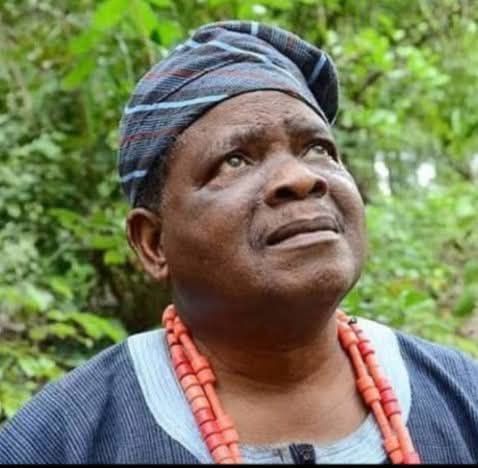
In Saworoide, Kólá Oyèwọ̀ mesmerised us all, embodying the Lápité character in near-perfect verisimilitude. With the commanding presence of royalty, he transformed villainy into an alluring art: he was wicked, brutal, firm, corrupt, self-centered, manipulative, and cunning, yet we all loved him. Ironic? Perhaps not.
It was Professor Biodun Jeyifo, elsewhere in a different context, that provided rich insights into that iconic performance, for me.
In his seminal 1984 book, The Yoruba Popular Travelling Theatre of Nigeria, Jeyifo noted that Yoruba traveling theatre form was quite important because of its incredible mobility, deep cultural roots, and long-lasting influence on modern African drama.
But here’s the argument I found most fascinating from Jeyifo’s: while early scholars dismissed traditional popular theatre forms as unpolished “folk” art, Jeyifo brought attention to the Alarinjo tradition as a highly philosophical, sophisticated, and deep art form that provided the intellectual basis for an understanding of African societies.
Until his death yesterday, Oyewo was one of the few products of that iconic Alarinjo culture: After completing Modern School at Osogbo, he joined the Oyin Adejobi Theatre Group and came under the mentorship of iconic figures like Lere Paimo and Oyin Adejobi himself. Like everyone who went through the Alarinjo culture, he was baptised into the entire gamut of performing arts: singing, dancing, acting, drumming, etc. After spending almost a decade with Oyin Adejobi’s Theatre Group, he moved to Ori Olokun Cultural Centre to join the University of Ife Theatre under Ola Rotimi in 1973.
So the mastery of his iconic performances in the latter years of Saworoide and Koseegbe didn’t come by accident; he learnt from the best through decades of practices and, later, theoretical research.
For Alagba Oyèwọ̀ and thespians of his generation, it’s not about the content of the script. It’s about the depth of performance, that element of verisimilitude that’s missing in today’s artless imitation.
Unlike many others, Oyewo brought the town to the gown, providing rich theoretical insights into what he had practiced for aeons.
Perhaps Kola Oyewo’s most memorable presence on the big screen (for me) was in Koseegbe, where he played the role of Mako, a principled yet vulnerable Customs boss.
I never met Oyewo, but those who knew him said Mako was the quintessential Oyewo in real life: principled, firm and goal-getting. And if there was any doubt about the veracity of that claim, his determination to study what he loved through thick and thin (he reportedly attended some classes with his son), rising to the apogee of the academic ladder, is a story in exemplary determination. That way, if we throw in some mischief, through Oyewo, Koseegbe presented us a rare case of life mirroring art.
He would later take that determination further by serving as a senior lecturer at Obafemi Awolowo University, Head of Department for Dramatic Arts at Redeemer’s University, and, later, faculty member at Elizade University.
Oyewo gave us all we needed to remember him as a thoroughbred product of the Alarinjo years: As Odewale (in The gods are not to blame), he brought continental attention to Ife with an eternally memorable performance; as Lapite in Saworoide, he made us all love the villain; as Mako in Koseegbe, he was symbol of moral resistance. As one of the few surviving thespians who stood as the bridge between the Alarinjo years and mordern era, he gave Yoruba Cinema great depth, discipline, and authentic language.
The last time I saw him was in a video shot by Nollywood star Kunle Afod. In that visit to his residence, the energy, fierceness and agility of the old Mako and Lapite years have succumbed to age and ill health. But the voice, the principled tonal intensity of that voice, was still present. I’m certain he never let that go, even in death; he was a principled man through and through.
Rest well, Labaluyeke.


Leave a Reply