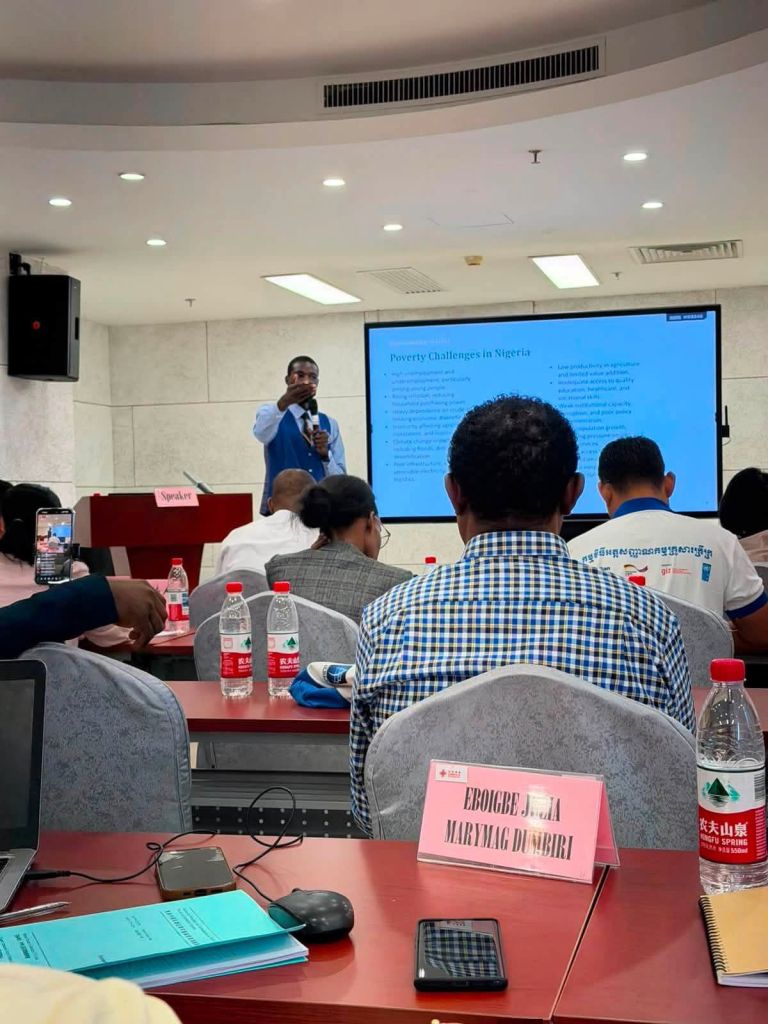
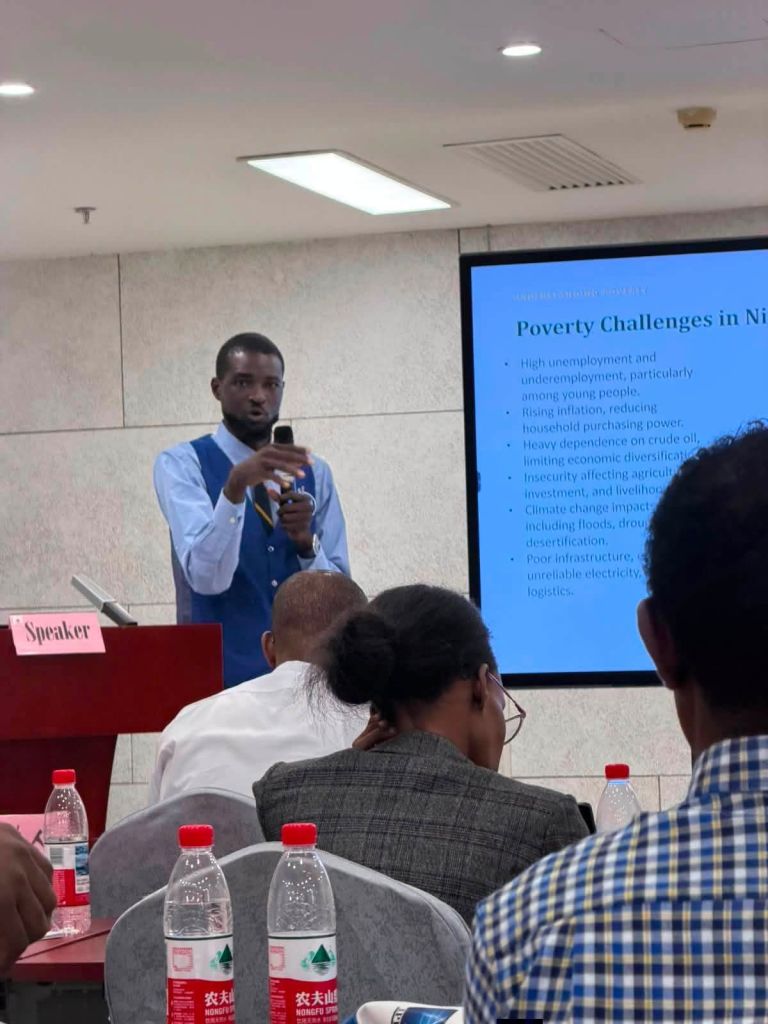
When Nigerians represent the country on international platforms, it is encouraging to see presentations that move beyond rhetoric to honest reflection and practical solutions. Idris Animasaun’s presentation at the seminar on Poverty Reduction Planning Policies and Practices in Developing Countries did exactly that.
His opening comparison of Nigeria with other African countries was striking. It reminded his audience that Nigeria is not merely another African nation; it is a continental heavyweight. With a population exceeding 230 million people, Nigeria’s fortunes inevitably affect the rest of Africa. His assertion that “When Nigeria sneezes, Africa catches a cold” captures this reality succinctly.
What deserves particular commendation is his balanced assessment of Nigeria. Rather than presenting a gloomy picture or indulging in patriotic exaggeration, he acknowledged both the country’s enormous potential and its daunting challenges. Ethnic diversity, insecurity, unemployment, inflation, infrastructure deficits, corruption, policy inconsistency, and excessive political competition remain formidable obstacles to sustainable development. Recognising these realities is the first step towards addressing them.
Perhaps the most significant lesson from his presentation is the emphasis on planning and institutional continuity. China’s remarkable success in lifting hundreds of millions of people out of poverty did not happen overnight, nor was it the product of a single government programme. It was built on decades of disciplined planning, measurable targets, sustained investment in human capital, infrastructure, agriculture, technology, and industrialisation. Governments changed policies where necessary, but they did not abandon national development objectives.
This is where Nigeria has much to learn. Successive administrations often introduce new programmes while discarding those of their predecessors, even when such programmes show promise. Development cannot thrive where policy is treated as a political trophy rather than a national commitment. Poverty reduction demands consistency, not constant reinvention.
Animasaun was also right to caution against blind imitation. Every country must develop according to its own realities. China’s model cannot simply be copied wholesale, but its principles—long-term planning, institutional discipline, investment in productive sectors, and measurable outcomes—are universally relevant. Nigeria must adapt these lessons to its federal structure, democratic institutions, and socio-cultural diversity.
His observation that investing in Nigeria is, in many respects, investing in Africa is equally compelling. A prosperous Nigeria would strengthen regional trade, expand markets, stimulate innovation, and contribute significantly to the African Continental Free Trade Area (AfCFTA). Nigeria’s success would not be a national achievement alone; it would become a continental catalyst.
Finally, there is something symbolic in his light-hearted remark about learning to use chopsticks while temporarily foregoing amala. Beyond the humour lies an important lesson: development requires openness to learning. Nations, like individuals, grow when they are willing to observe, adapt, and improve without losing their identity.
Idris Animasaun’s presentation is therefore more than a seminar report. It is a timely reminder that Nigeria’s future will not be secured by abundant resources alone but by visionary leadership, institutional stability, disciplined execution, and a citizenry committed to long-term national progress.
China’s story is not merely one to admire from afar. It is an invitation for Nigeria to embrace planning over politics, continuity over disruption, and development over short-term expediency. If those lessons are taken seriously, the echoes from China may yet become the blueprint for Nigeria’s own transformation.
— The Asudemade Perspective


Leave a Reply