By Maroof Asudemade
The death of Oba John Olubunmi Isioye-Dada, the Osi Balogun of Ibadanland, has once again brought into sharp focus the unique succession system of the Olubadan chieftaincy institution and the potential implications of recent developments surrounding the elevation of some members of the Olubadan-in-Council.
Among the questions now being asked in many quarters is whether the refusal of Senator Sharafadeen Alli to accept the crown and staff of office associated with his promotion within the Balogun line could create a bottleneck in the traditional succession arrangement, particularly for chiefs immediately below him, including Oloye Samuel Adegboyega Adeniran, the current Abese Balogun of Ibadanland.
The concern is understandable. Traditionally, the Olubadan succession system operates like a ladder. Whenever a vacancy occurs at a higher rung, everyone below moves up one step. The beauty of the arrangement lies in its predictability. Unlike many traditional institutions across Yorubaland where succession disputes often end up in prolonged litigation, the Ibadan system has historically enjoyed remarkable stability because every chief knows his place in the queue.
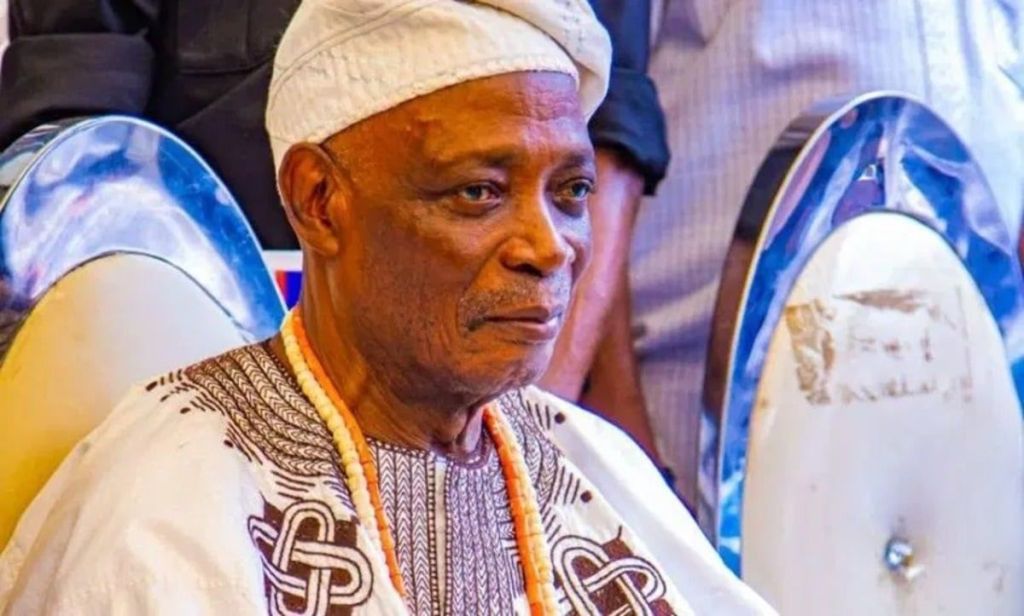
With the demise of Oba Isioye-Dada, the expectation is that the Balogun line would naturally move upward. The Osi Balogun becomes Otun Balogun, the Ashipa Balogun becomes Osi Balogun, the Ekerin Balogun moves to Ashipa Balogun, and so on down the ladder.
However, the situation involving Senator Sharafadeen Alli introduces a unique dimension. Following his promotion, Senator Alli was expected to become Ekarun Balogun and, by virtue of the 2023 elevation of members of the Olubadan-in-Council, a beaded-crown-wearing Oba. It’s a common knowledge that he did not participate in the state-organised coronation ceremony through which the promoted chiefs received their crowns and staff of office.
The critical question therefore is whether his refusal to accept the crown amounts to a rejection of the chieftaincy promotion itself.
In my view, the answer is no. The issue of the crown and the issue of the chieftaincy title are not necessarily the same. The crown is an adornment and a recognition attached to the office under the prevailing arrangement approved by the government. The title itself, however, remains rooted in customary law and the age-old succession structure of Ibadanland.

Unless Senator Alli expressly renounces his promotion or the Olubadan-in-Council formally determines that he has forfeited his position, it would be difficult to argue that he has ceased to occupy his place on the succession ladder merely because he declined to participate in a coronation ceremony.
Indeed, the late Oba Lekan Balogun and several members of the Olubadan establishment had consistently maintained that the introduction of crowns should not alter the fundamental succession structure of Ibadan traditional governance. That position suggests that the title remains primary while the crown is incidental.
Consequently, the death of Oba Isioye-Dada should ordinarily trigger the usual chain of promotions. Senator Alli would be expected to move upward in rank, while Oloye Samuel Adegboyega Adeniran should also advance from Abese Balogun to Ekarun Balogun if all customary procedures are followed.
The real danger lies not in Senator Alli’s personal position but in the possibility of administrative hesitation or legal ambiguity. If authorities become uncertain about whether a chief who declined coronation can continue to enjoy subsequent promotions, then delays could arise. Such delays may create confusion and fuel unnecessary controversies within a system that has thrived for generations on clarity and certainty.
Yet, history offers reassurance. The Olubadan institution has survived colonial interventions, political transitions, judicial contests, and reforms introduced by successive governments. Its resilience has always derived from a steadfast adherence to the principle of orderly progression. For that reason, Ibadan should not be heading toward a chieftaincy cul-de-sac. The death of the Osi Balogun is undoubtedly a significant event, but it should not derail a succession structure that has proven its effectiveness over more than a century.
What is required now is prompt clarification from the Olubadan-in-Council and the appropriate authorities. Such clarification would remove doubts regarding the status of chiefs who have reservations about the crown arrangement while preserving the integrity of the succession ladder.

The greatest tribute to the late Oba Isioye-Dada would be to ensure that the institution he served continues to function smoothly, predictably and in accordance with the customs that have made the Ibadan chieftaincy system one of the most admired traditional governance models in Nigeria.


Leave a Reply