Only wickedness, insensitivity and hypicrisy could make Governor Seyi Makinde claim that Oyo people are hungry despite the quadrupled federal allocations he is getting from Abuja while he imposes cut-throats on motorists for traffic offences. The reason why fares are still high in Oyo State is not farfetched then.
At a time when motorists and households across Oyo State are grappling with rising transportation and living costs, the Oyo State Government refuse to be sensitive by the financial burden imposed through traffic enforcement.
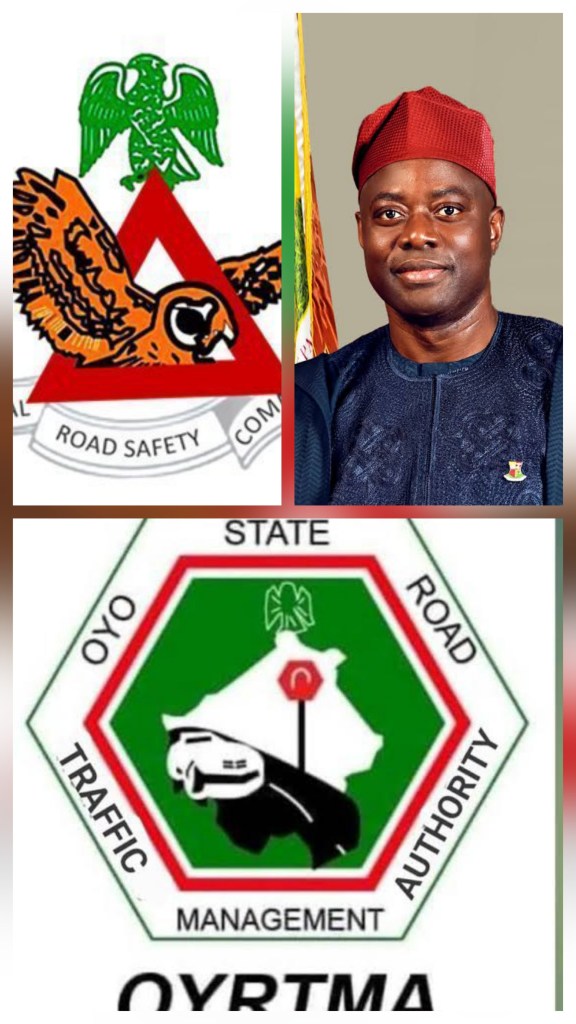
The disparity between the published penalties of the Oyo State Road Transport Management Authority (OYRTMA) and those of the Federal Road Safety Corps (FRSC) is particularly striking.
For instance, the published Oyo State revenue schedule puts seat-belt violation at ₦10,000, while the FRSC’s published schedule puts the corresponding offence at ₦2,000. Similarly, OYRTMA’s schedule lists wrongful overtaking at ₦10,000, compared with FRSC’s ₦3,000, while the use of a mobile phone while driving attracts ₦10,000 under the OYRTMA schedule, compared with ₦4,000 under the FRSC schedule.
Even more striking is obstruction: the Oyo State schedule lists ₦25,000, while the FRSC schedule lists ₦3,000.
These figures deserve public attention scrutiny. Traffic regulation is necessary, and motorists who violate traffic laws should be held accountable. But enforcement should not become another avenue for imposing disproportionate financial pressure on citizens already struggling with the cost of living.
There is an irony here. Governor Seyi Makinde has repeatedly spoken about the hardship being experienced by Nigerians and has criticised the Federal Government’s economic policies, at times describing the situation as a “voodoo economy.” Yet, under his administration, motorists in Oyo State are confronted with what many would regard as steep traffic penalties for offences that attract substantially lower fines under the federal FRSC schedule.
If the people are hungry, as the governor himself acknowledges, government at every level should be asking how to reduce avoidable financial pressure on citizens, not how to increase it. The issue is not whether traffic laws should be enforced. They should. The question is whether the penalties are proportionate, transparent, legally grounded and sensitive to prevailing economic realities.
Oyo motorists deserve enforcement that promotes road safety but not a system perceived as another mechanism for extracting money from already burdened citizens.
The Makinde administration should therefore review these charges and explain publicly why an offence such as failure to wear a seat belt should attract ₦10,000 through the Oyo State schedule when the corresponding FRSC penalty is ₦2,000.
Road safety is important. But so is the economic survival of the people.


Leave a comment