Maroof Asudemade
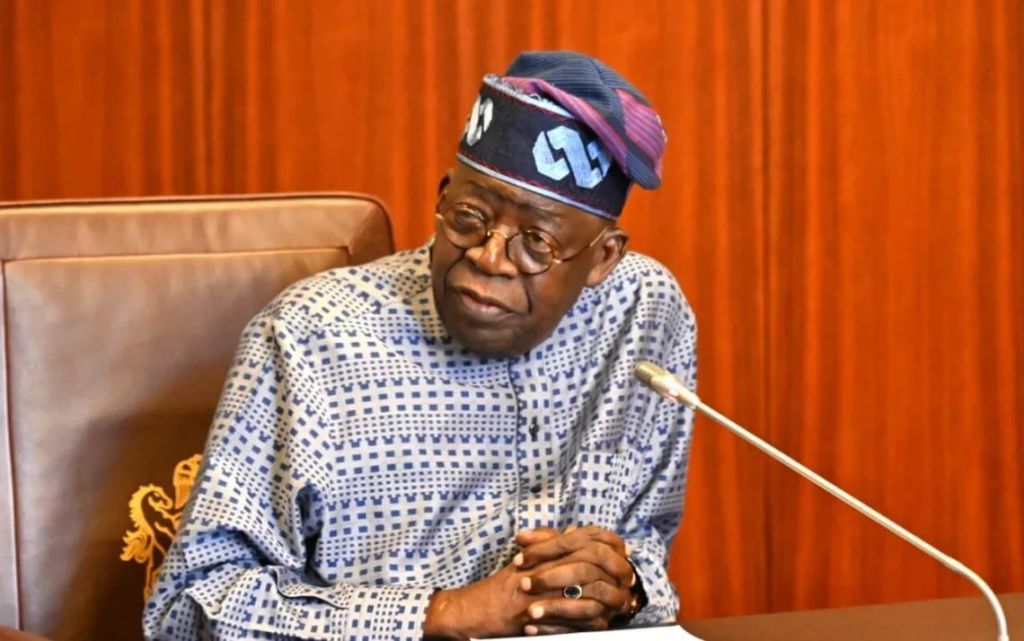
President Bola Ahmed Tinubu’s response to a delegation of Christian leaders led by Cardinal John Onaiyekan has generated considerable debate. Asked whether the Independent National Electoral Commission (INEC) would be allowed to conduct a free and fair election in 2027, the President reportedly replied, “All is fair in politics.”
The remark has since attracted criticism. Cardinal Onaiyekan interpreted it as suggesting that the President was prepared to employ every possible means to secure re-election. While the concern is understandable in a country with a history of electoral controversies, such an interpretation stretches the statement beyond what it necessarily means.
Politics is, by its very nature, a contest for power. Every democratic system is built around competition among individuals, parties and ideologies seeking the mandate of the electorate. Within that contest, political actors naturally deploy every legitimate strategy available to gain power, retain it or exercise it effectively. In that sense, “all is fair in politics” should be understood as a recognition of the realities of political competition and not as a licence for illegality.
Political power is not obtained by wishful thinking. It is earned through strategy. Successful politicians build alliances that broaden their appeal beyond ethnic, religious and regional divides. They negotiate with competing interests, lobby influential stakeholders, mobilise grassroots supporters and campaign vigorously across the country. They also identify weaknesses in their opponents’ arguments, policies and records and present themselves as better alternatives. None of these actions is unethical. They are, in fact, the very essence of democratic politics. And, in no small measure, President Bola Tinubu deployed all these strategies during electioneering for his election in 2022 and 2023, even when he met stiffer opposition not only from his opponents but also from within his party.
President Tinubu himself is a product of strategic politics. His emergence as President in 2023 was not accidental. It was the culmination of decades of political networking, coalition-building, negotiation and organisational discipline. From the formation of opposition alliances that eventually produced the All Progressives Congress (APC) to the painstaking management of internal party contests, his political career demonstrates that strategy, not force, is often the decisive factor in politics.
History offers countless examples. Across mature democracies, political parties constantly negotiate coalitions, persuade influential interest groups, recruit defectors from rival parties, expose weaknesses in their opponents’ records and use constitutional provisions to their advantage. These are not abuses of democracy; they are integral features of democratic competition.
One of the most misunderstood aspects of politics is exploiting an opponent’s weakness. Every election campaign is fundamentally a comparison between alternatives. When a candidate highlights the failures of an incumbent or questions the feasibility of an opponent’s manifesto, that is political strategy, not political misconduct. Likewise, using constitutional procedures to one’s advantage, whether by forming alliances in parliament, challenging decisions in court or taking advantage of electoral laws, is entirely legitimate so long as it remains within the law.
What would be unacceptable is interpreting the phrase “all is fair in politics” as endorsing election rigging, voter intimidation, abuse of state institutions, violence, corruption or manipulation of electoral bodies. Such actions are not political strategy; they are violations of democratic principles and the rule of law. No responsible leader should be understood to be advocating them without clear evidence. If President Tinubu did not deploy manipulative strategies to secure his electoral contest in 2023, even when he had no paraphernalia of office to make them happen, why would he explore that route now?
The context of President Tinubu’s response is therefore important. Saying that politics is a tough contest where every lawful political advantage will be pursued is different from promising to subvert the electoral process. There is a world of difference between hard politics and dirty politics. Why did Cardinal Onaiyekan choose to believe that Tinubu’s ‘all is fair in politics’ to mean that he’s ready to employ manipulative strategies to secure victory in 2027 and not that Tinubu is ready to employ democratic and constitutional strategies to win the election?
Nevertheless, Cardinal Onaiyekan’s caution serves a useful democratic purpose. Religious leaders, civil society organisations and the media have every right to demand credible elections and to hold those in power accountable. Their vigilance strengthens democracy. At the same time, public commentary should avoid attributing meanings that go beyond the ordinary understanding of the words used.
The burden remains on President Tinubu and his administration to ensure that INEC operates independently and that security agencies act professionally before, during and after the 2027 elections. If those conditions are met, political parties should then be free to deploy every lawful strategy available in terms of building alliances, negotiating support, lobbying stakeholders, campaigning vigorously, exposing opponents’ weaknesses and utilising constitutional mechanisms to persuade Nigerians to vote for them. That, after all, is how democracy is supposed to work.
The saying “all is fair in politics” should therefore not be read as an endorsement of electoral malpractice. Rather, it should be understood as an acknowledgment that politics is an arena of intense but legitimate competition, where success belongs not merely to those with noble intentions but to those who organise better, strategise more effectively, communicate more persuasively and earn the confidence of the electorate within the bounds of the Constitution and the law.



Leave a Reply