By Maroof Asudemade
Political opposition is at its best when it subjects government policies to rigorous scrutiny and offers Nigerians practical, workable alternatives. It is at its worst when it substitutes catchy rhetoric for sound economic thinking.
That is why the recent statement by the National Publicity Secretary of the African Democratic Congress (ADC), Bolaji Abdullahi, that “the man who drives an SUV should not pay the same price of petrol as the man who rides an Okada” is disappointing. It sounds appealing at first hearing, but a closer examination reveals that it is more populist than practical.
The first question is simple: how exactly would such a policy work? Would filling stations be required to operate separate pumps for SUVs, saloon cars, buses, tricycles and motorcycles? Would attendants first inspect a vehicle before deciding what price to charge? Would a commercial SUV transporting passengers pay the same price as a privately owned SUV? What happens when fuel is purchased in jerry cans? Who determines eligibility, and who enforces compliance? These are not trivial questions. They expose the fundamental weakness of the proposal.
Petrol is a commodity. Its price reflects production costs, refining, transportation, distribution, taxes and market realities but not the social status of the buyer. Once the product is identical, creating multiple prices based solely on the vehicle being fuelled would introduce confusion, encourage corruption and open another avenue for arbitrage and fuel smuggling.
More importantly, the suggestion ignores a basic economic reality. Owners of larger vehicles already pay substantially more for fuel because they consume more. Filling the tank of an SUV may cost well over ₦100,000, while an Okada rider may spend barely a fraction of that amount. The larger vehicle already bears a higher financial burden through greater consumption. The market naturally produces that outcome without government-imposed discrimination in pricing.
If Mr. Abdullahi’s concern is that wealthier Nigerians should contribute more, there are proven policy instruments for achieving that objective. Governments across the world impose luxury taxes, progressive income taxes, higher vehicle registration fees, environmental levies and congestion charges. Those measures target wealth without distorting commodity pricing or creating administrative chaos. In actual fact, the recent tax reforms signed into law by President Bola Tinubu already take care of making the rich pay more while the poor pay less. I don’t know how Bolaji Abdullahi misses this. When, as a member of the opposition, you are fixated on petty rhetoric to make the ruling government look bad, the result is the porous statement Abdullahi made during the interview.
If, on the other hand, he was referring to different grades of petrol as is common in many countries, that is an entirely different matter. Even then, motorists are free to buy the grade appropriate for their vehicles or within their budgets. Governments do not operate separate pricing systems based on whether a citizen arrives at a filling station in an SUV or on a motorcycle.
Nigeria’s economic challenges demand serious thinking. Millions of Nigerians are struggling with inflation, rising transport costs and declining purchasing power. They expect political parties seeking power to present coherent policy alternatives backed by economic logic and implementation strategies but not slogans that buckle under the weight of elementary questions.
The ADC has every right to criticise the Federal Government’s economic policies. Indeed, that is the responsibility of a credible opposition. But criticism alone is not enough. It must be accompanied by proposals that withstand public scrutiny and inspire confidence. The hallmark of statesmanship is not saying what sounds good in a political rally; it is proposing what can actually work in government.
As the 2027 political contest gathers momentum, Nigerians will increasingly judge parties not by the volume of their criticism but by the quality of their ideas. The country’s future deserves thoughtful policies, not simplistic soundbites.
On this occasion, the ADC spokesperson missed an opportunity to enrich the national conversation. Instead of advancing a realistic alternative, he introduced a proposition that is difficult to defend economically, administratively and practically. Nigeria deserves better. Our politics deserves better. And our public policy debates must be better. ADC, presenting itself as an alternative, just throws away the chance to convince Nigerians that they are better.
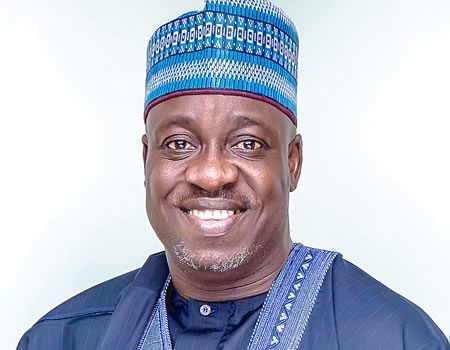
Bolaji Abdullahi, ADC Spokesperson


Leave a Reply