By Maroof Asudemade
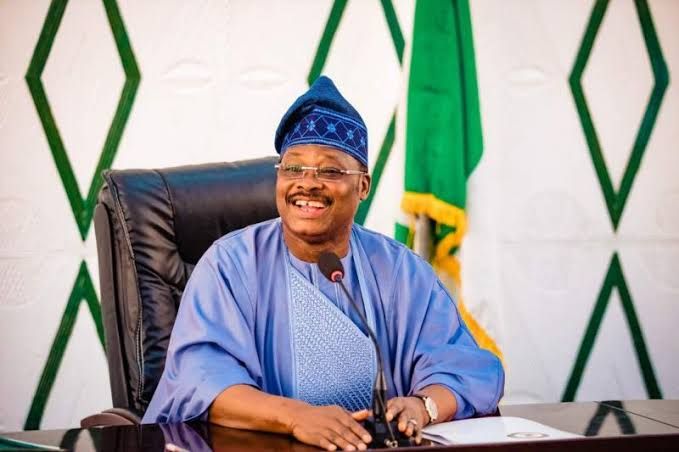
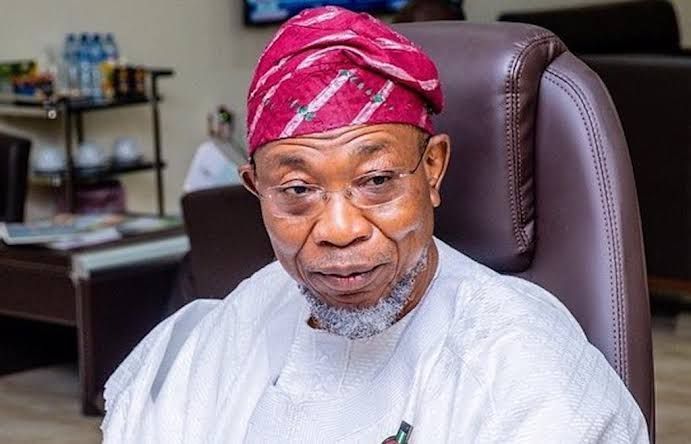
Oyo and Osun APC chapters are paying for the perceived sins of late Senator Abiola Ajimobi and Rauf Aregbesola with the way the party continues to lose elections since after their terms in office. Abiola Ajimobi and Rauf Aregbesola governed their respective states between 2011 and 2019. Both gentlemen governed well in their first term and it was Ajimobi who first paid 13th-month salary to Oyo workers. It was during Jonathan’s presidency and there was an oil boom such that the country had an Excess Crude Account into which surplus revenues from the sale of crude oil were being kept. No one can also deny that both governors embarked on ambitious transformations of their respective states. But did they deliberately slow down or circumstances forced them to slow down?
Nigeria went into recession during Buhari’s presidency and revenues dwindled while states found it difficult to pay salaries and pension allowances. Only two states, Lagos and Rivers, were not owing salaries. Some states owed as many as 12 months’ salaries. In Oyo State, Ajimobi was transparent with the state accounts to union leaders. The most number of months he owed salaries was six months, and he was settling the backlogs as funds became available. In Osun, Aregbesola had a more difficult situation on his hands as the state, having inadequate revenue, was paying half salaries to workers while the balances accrued.
Yet, the workers of both states painted Ajimobi and Aregbesola as being wicked and insensitive over situations that were largely beyond their control. Many citizens took sides with the workers, and both governors were considered callous in government. APC continues to pay for the perceived sins till now, as there is always a reference to the dark days of recession which prevented the governors from paying salaries and pensions.
Governors who are paying salaries and pensions regularly now have become darlings of the workers, while the workers do not bother to reason that the country is not in recession and is generating substantially more revenue, making it possible for states to receive far more from the federation account than they did during the difficult years.
This is where history, fairness and a little economic reasoning become necessary. It is easy to judge yesterday with the comfort of today. It is even easier for a worker who receives his salary on the 25th of every month today to conclude that any governor who failed to do the same must have been wicked, incompetent or simply unconcerned about the welfare of his people. But governance does not operate in a vacuum. A governor cannot spend money that does not exist, and a state cannot manufacture revenue merely because its workers need to be paid.
The years of the Buhari administration were particularly difficult for state governments. The collapse in crude oil prices, production challenges, dwindling government revenues and the recession created a fiscal crisis across the federation. The consequences were not peculiar to Oyo or Osun. Across Nigeria, governments struggled with salaries, pensions and other recurrent obligations. The important question, therefore, is not whether Ajimobi and Aregbesola owed salaries. They did. The question is why did they owe them?
Were they deliberately withholding money sitting in government coffers simply to punish workers? Was there a secret abundance of revenue which they refused to deploy? Or were they confronting a fiscal crisis in which the resources available to government were simply inadequate to meet all its obligations? These questions deserve honest answers.
There is also a need to distinguish between political incompetence and economic circumstance. A governor can be criticised for how he manages scarce resources. A governor can be criticised for his priorities, his projects, his appointments or his policies. But it is intellectually dishonest to attribute every unpaid salary to wickedness when the fundamental problem was a shortage of resources.
Ajimobi’s government did not create the recession. Aregbesola’s government did not determine the price of crude oil in the international market. Neither governor controlled federal revenue nor could either of them command oil-producing states to increase national production. They were state governors operating within a national economic crisis. Indeed, the fact that several states owed workers considerably more than Oyo did should tell us something. The crisis was systemic. It was not an Ajimobi invention. It was not an Aregbesola concoction.
This is not an argument that workers should not have protested. Workers have every legitimate right to demand their wages. Salary is not charity. It is the lawful entitlement of a worker who has rendered service. Civil servants who went for months without receiving their full salaries suffered genuine hardship. Many borrowed money, struggled to pay school fees, accumulated debts and faced enormous pressure at home. Their anger was understandable. But understandable anger should not become permanent historical judgment.
There is a difference between saying, “I suffered because my government could not pay me,” and saying, “My governor deliberately refused to pay me because he did not care.” The first may be an accurate description of an experience. The second requires evidence. The same fairness should be extended to pensioners. Nobody should trivialise the pain of an elderly person waiting for his pension. But the inability of a government to meet its pension obligations during a fiscal crisis does not automatically establish that the government was indifferent to pensioners.
What is particularly troubling is the selective memory with which politics is often conducted in Oyo and Osun. The economic circumstances of 2015–2018 are forgotten, while the unpaid salaries are remembered. The national recession is forgotten, while the governors are remembered as villains. The fall in federal revenue is forgotten, while the accumulated wage arrears become political weapons at every election. And because workers constitute a substantial voting population, politicians have discovered that the easiest way to mobilise them is to remind them repeatedly of their past suffering without explaining the economic circumstances that produced it.
There is nothing wrong with workers voting against a political party. They have the same democratic rights as every other citizen. But citizens should vote on the basis of a complete assessment of governance, not on the basis of a single painful chapter whose circumstances have been deliberately stripped of context.
Today, when workers receive their salaries regularly, they naturally appreciate the government responsible. That is understandable. But the ability of today’s government to pay promptly is not necessarily evidence that today’s governor is more compassionate than yesterday’s governor. It may simply mean that today’s government is operating in a substantially different revenue environment.
If federal allocations have increased dramatically because of changes in crude oil prices, exchange rates, federation revenue and other fiscal factors, then comparing today’s cash position with that of a government operating during recession is like comparing two households without asking whether they earn the same income.
A man who earns ₦500,000 a month cannot reasonably be compared with another who earned ₦150,000, simply because both had the same number of children and the same household expenses. The capacity to pay is determined partly by available resources. This is the appeal to reason that Oyo and Osun citizens, particularly civil servants, must consider.
Political parties should not be permanently punished for economic circumstances they did not create. Politicians should be judged by what they did with the resources available to them, not merely by what happened when the resources disappeared.
If Ajimobi made mistakes, let us identify them. If Aregbesola made mistakes, let us identify them. If either administration wasted resources, let the evidence speak. If there were misplaced priorities, they should be discussed honestly. But unpaid salaries during a national recession should not, by themselves, become proof of wickedness.
There is another dimension to this matter that deserves attention. Governments do not operate independently of the national economy. When the federal government earns more, states benefit. When oil prices rise, federation revenue can improve. When the economy grows, tax receipts can increase. When inflation and exchange-rate changes alter the nominal value of federal receipts, states may receive larger allocations even though the purchasing power of that money tells another story. Therefore, the regular payment of salaries today should be celebrated without rewriting yesterday’s history.
The workers of Oyo and Osun deserve empathy, but the governors of yesterday also deserve fairness. Perhaps the greatest injustice being done to APC in these two states is not merely electoral defeat. It is the construction of a political memory in which the party is permanently associated with salary arrears, while the economic crisis that produced those arrears is conveniently erased.
That is not how responsible citizenship should work. Citizens must demand accountability from every government. They must praise good governance when they see it and reject incompetence when they encounter it. But they must also be intellectually honest enough to distinguish between failure caused by bad management and hardship caused by circumstances beyond a government’s control.
The lesson from the Ajimobi and Aregbesola years should therefore not be that APC governors were inherently hostile to workers. The lesson should be that states are vulnerable when national revenues collapse, and that workers are often the first casualties of a fiscal crisis.
The better question for Oyo and Osun voters is not, “Who made me suffer when salaries were unpaid?” It is, “What were the circumstances, what did the government do with what it had, and what has every succeeding government done differently?” That is the kind of question mature democracy requires.
Workers should remember their suffering, but they should not surrender their judgment to it. Citizens should remember the arrears, but they should also remember the recession. They should remember the pain, but they should also remember the economic context. Above all, they should resist the temptation to make political parties perpetually pay for economic circumstances that no governor had the power to control.
History is more complicated than campaign slogans. And if Oyo and Osun are to make better political choices in the future, their citizens must learn to judge governments not only by what they received, but by what was available to the government at the time.
That is the difference between political memory and political wisdom.


Leave a Reply