By Maroof Asudemade
There is something deeply troubling about the unfolding saga between the Economic and Financial Crimes Commission (EFCC), the Osun State Government and the Federal Government. It is not merely another political disagreement between an opposition-controlled state and the federal authorities. It raises a much more fundamental question about the Nigerian state: does the law remain the law when an election is approaching?
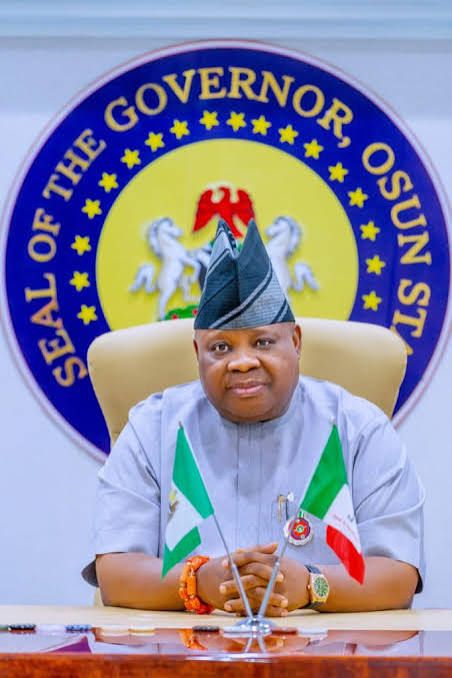
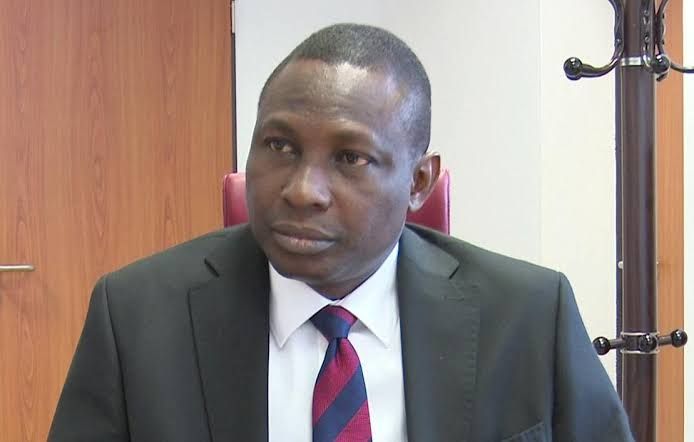
The EFCC reportedly obtained a Federal High Court order restricting the operation of some bank accounts belonging to the Osun State Government amid allegations relating to financial crimes and vote buying. The development came only days before the August 15 Osun governorship election, immediately triggering political controversy.
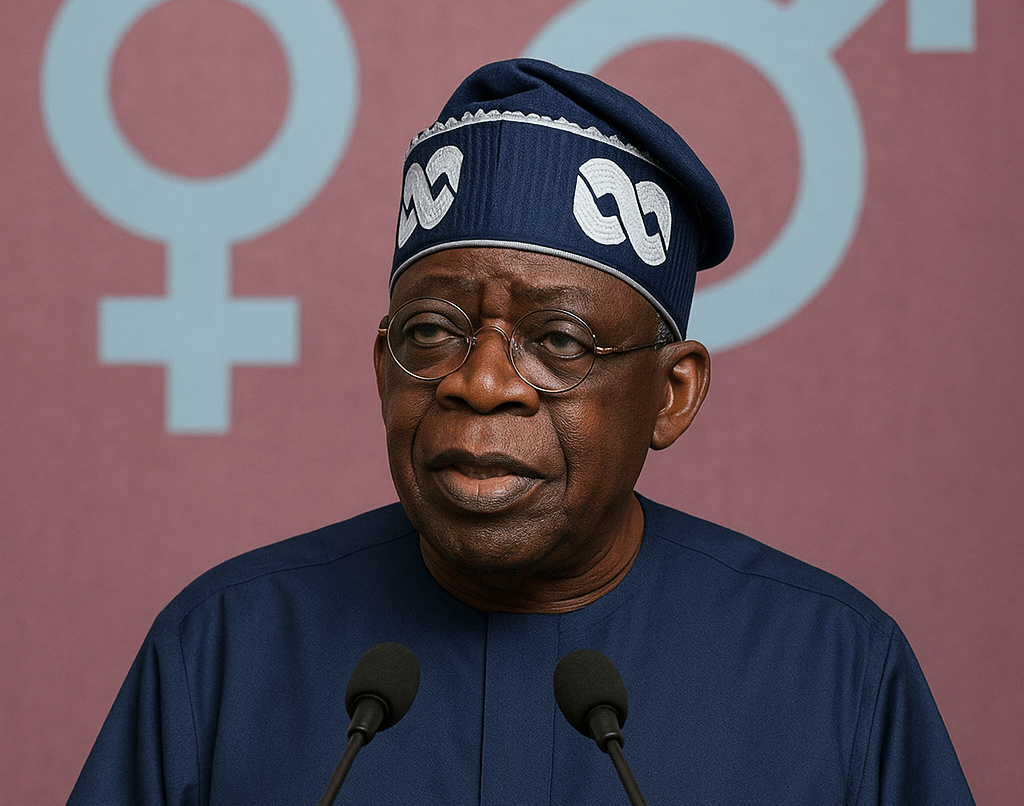
Then came the intervention from President Bola Ahmed Tinubu. The President directed the EFCC to return to court and seek the vacation of the order, principally because of its timing and the possible implications for the forthcoming governorship election. This is where the matter becomes troubling.
If the EFCC had sufficient grounds to approach a court and the court, after considering its application, granted an order, why should the proximity of an election suddenly become a reason to reverse the effect of that lawful process? Does corruption become less serious when an election is around the corner? Does alleged diversion of public funds become less deserving of investigation because politicians are preparing for an election? Does the responsibility of government to protect public funds disappear during an election period?
And, perhaps most importantly, are we now saying that the enforcement of the law should be suspended whenever an election is approaching? These are questions that should concern every Nigerian, regardless of political affiliation.
Imagine that the account of a private individual suspected of money laundering had been frozen pursuant to a court order. Would the government ask the EFCC to release the account because the suspect was contesting an election in seven days? Suppose a company was being investigated for financial crimes and its accounts were restricted by a court. Would the government say the restriction should be lifted because the directors were politically important during an election? If the answer is no, why should a state government be treated differently?
A state government is not a political party. The money in its accounts belongs to the people. It is public money. The fact that an election is approaching should arguably make the protection and monitoring of public funds more important, not less.
There is, of course, a legitimate concern that law-enforcement agencies must not be used as instruments for influencing elections. An investigation launched days before an election can easily generate suspicion, particularly when it concerns a government controlled by an opposition party. The EFCC therefore has a responsibility to demonstrate that its actions are based on credible evidence and due process rather than political considerations.
But there is a fundamental difference between preventing an anti-corruption agency from interfering with an election and preventing it from enforcing the law during an election period. The former is necessary for democracy. The latter could be dangerous to democracy.
If the EFCC acted unlawfully, the proper place to challenge its action is the court. If the court order was improperly obtained, the Osun State Government should challenge it. If the order was granted without sufficient evidence or jurisdiction, the judiciary has the authority to correct that.
But if the order was lawfully obtained, the mere fact that an election is approaching should not become a reason for suspending the consequences of the law. That is the dangerous precedent Nigerians must worry about.
The EFCC did not reportedly wake up one morning and arbitrarily freeze the accounts. It went to court. A court considered the application and granted an order. The President did not personally vacate the order; rather, he directed the EFCC to return to court and seek its vacation. That legal distinction is important.
But the larger institutional question remains: should political considerations determine whether a court-backed investigation proceeds? If the answer is yes, then we are gradually creating a system in which elections become temporary periods of immunity from accountability.
Today, it is Osun. Tomorrow, it could be another state controlled by another political party. If the principle becomes accepted that investigations or enforcement actions should be suspended whenever an election is close, politicians will quickly learn how to exploit election calendars as shields against scrutiny.
An election is not a period of legal suspension. In fact, elections should be periods of heightened accountability. Public resources are particularly vulnerable to abuse during election periods because political actors have enormous incentives to deploy money and state machinery for electoral advantage.
If there are allegations that public funds are being diverted for political purposes, the answer should not be to relax scrutiny because an election is approaching. The answer should be to increase scrutiny while ensuring that every investigation is conducted professionally and impartially.
If there is no wrongdoing, the investigation will establish that. If there is wrongdoing, the investigation should expose it. That is why institutions such as the EFCC exist.
Nigeria has suffered for too long from the selective application of laws. The problem has never really been the absence of legislation. We have laws against corruption, money laundering, vote buying and abuse of public office. We have institutions established to enforce those laws. We have courts empowered to determine whether those laws have been properly applied. Our deeper problem is that accountability often seems to depend on who is being investigated, which political party the person belongs to and how close we are to an election.
The APC should not defend the EFCC today merely because the agency is investigating an opposition-controlled government and then condemn the same agency tomorrow when its own officials are investigated. Likewise, opposition parties should not demand the independence of anti-corruption agencies when their members are under investigation and then question that independence when the investigation turns towards their opponents.
The law should have no political party. The EFCC should have no political party. The judiciary should have no political party. And public money should certainly have no political party.
If the Osun State Government has done nothing wrong, let the investigation establish that. If the EFCC has acted improperly, let the court correct it. If the court order was obtained on insufficient grounds, let the judiciary say so. If there is credible evidence of financial crimes or vote buying, let the law take its course. But Nigeria must be careful not to establish the dangerous doctrine that the law should take a holiday because politicians are preparing for an election. That would be a very bad evolution of our democracy.
A mature democracy is not one in which politicians are protected from difficult investigations during elections. A mature democracy is one in which everybody remains subject to the law regardless of political status, party affiliation or electoral timetable.
If the President is genuinely concerned about the credibility of the Osun election, the better approach is not to create the impression that law enforcement must retreat because an election is near. Rather, the government should ensure that the EFCC operates independently, that the courts remain free to determine the legality of its actions, that INEC conducts the election without interference, that security agencies protect voters and that allegations of vote buying are investigated wherever they originate.
The credibility of an election does not come from shielding politicians from investigation. It comes from demonstrating that nobody is above the law. Nigeria cannot claim to be advancing democratically while simultaneously teaching politicians that elections can become periods of legal immunity. We cannot tell citizens that the law is supreme and then create exceptions whenever political circumstances become inconvenient.
If the proximity of an election can determine whether the law should be enforced, then we have not merely weakened the rule of law. We have politicised the law itself. And that is perhaps one of the clearest signs of how badly Nigeria has evolved.


Leave a Reply