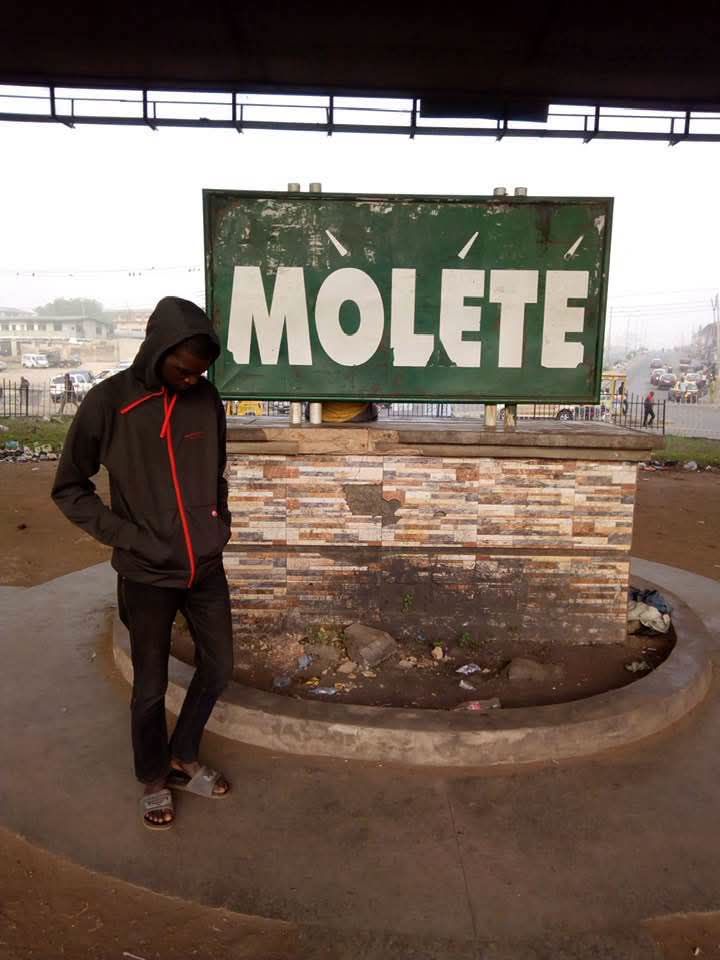
By every standard, Molete deserves better organisation. To many outsiders, Molete is merely another transport hub in Ibadan. To people like this writer who know the city intimately, however, Molete is an institution; a melting pot of commerce, transportation, culture, and human interactions. It has, for decades, been one of the busiest gateways into the ancient city. Unfortunately, what should have remained a symbol of organised urban life has gradually become a victim of neglect, congestion, environmental abuse, and policy inconsistency.
It is, therefore, refreshing to see a son of the soil, Idris Animasaun, the one calls himself Mogaji of Molete (I think he earns the sobriquet because no one cares about Molete like he does), environmentalist and sustainable development enthusiast, refusing to accept the decay as the inevitable fate of the community. His proposal to transform Molete Park, the underbridge and adjoining neighbourhoods into a modern, orderly and economically productive district is not merely ambitious; it is the kind of visionary thinking that should define twenty-first-century governance. The Molete Bridge is iconic, was built and commissioned by Major General David Jemibewon, the military governor of the defunct Western Region under late General Murital Muhammed as the head of state, in 1976.
Great cities are not built by people who merely manage decline. They are built by men and women who dare to imagine possibilities where others see impossibilities.
Animasaun’s recollection of returning to Ibadan in 2018 after six years away is both nostalgic and instructive. He recalled that the first place he deliberately visited was Molete because, regardless of the hour of arrival, it was the one place where he always felt safe. That simple statement captures what Molete once represented in the consciousness of Ibadan residents. Sadly, the Molete of today bears little resemblance to that reassuring image. The district has become a shadow of its glorious past.
The tragedy is not that Molete has deteriorated. Cities naturally evolve. The real tragedy is that governments have too often lacked the discipline to sustain worthwhile initiatives. Urban renewal has become a victim of political transition. One administration lays a foundation; another abandons it. Successive governments often prefer to pursue fresh projects that bear their own political signature rather than consolidate existing ones.
This culture has cost Oyo State dearly. The late Senator Abiola Ajimobi demonstrated what political will could achieve when his administration undertook significant improvements to Molete and other strategic locations in Ibadan. Although those interventions were not exhaustive, they reflected an appreciation for the importance of organised public spaces. Unfortunately, maintenance, the silent pillar upon which development rests, did not receive the same attention after his tenure.
Development is not an event. It is a culture.
Roads, parks, markets and transport terminals are not self-sustaining. They require consistent maintenance, strict enforcement of planning regulations and governments that understand that continuity is a greater legacy than novelty.
Perhaps the boldest aspect of Animasaun’s proposal is his recognition that the perennial challenge posed by roadside traders cannot simply be resolved through forceful eviction. Experience across Nigeria has shown that demolishing stalls without creating viable alternatives merely relocates the problem temporarily. Before long, traders return because necessity is often stronger than official directives.
His proposal for relocation and integration reflects a more humane and sustainable approach. Markets are essential components of urban life. The challenge is not their existence but their organisation. Cities across the world successfully integrate commerce into carefully planned environments without sacrificing order, sanitation or public safety. Molete deserves nothing less.
Beyond aesthetics lies an even greater opportunity. A properly redeveloped Molete could become an economic powerhouse. Efficient transport infrastructure, organised commercial spaces, modern recreational facilities, improved drainage, adequate parking, landscaping and enhanced security would attract investors, increase property values, create employment and substantially boost the internally generated revenue of Oyo State.
Urban renewal should never be viewed as an expenditure alone. It is an investment whose dividends are measured in prosperity, security, environmental sustainability and improved quality of life.
Of course, such an ambitious project cannot succeed through government action alone. It must involve transport unions, market associations, traditional institutions, residents, professional town planners, environmental experts and the private sector. Every successful urban regeneration project around the world has been built upon collaboration rather than coercion.
Most importantly, this vision must transcend political cycles. Molete should not become another abandoned master plan gathering dust because its originator belongs to no government or because a new administration wishes to chart a different course. Good ideas have no political party. Development has no ethnic identity. Progress recognises no partisan boundary.
What should matter is whether the proposal serves the public interest. Idris Animasaun has placed before Oyo State an invitation, not merely to rebuild Molete, but to rethink urban development itself. His proposal challenges policymakers to move beyond cosmetic beautification towards comprehensive transformation. It asks difficult questions about governance, sustainability, environmental responsibility and economic planning.
Those questions deserve thoughtful answers.
History teaches that every great transformation begins with someone bold enough to dream beyond prevailing limitations. Whether Molete becomes another missed opportunity or a shining example of urban regeneration will depend on whether those entrusted with public authority possess the courage to convert vision into reality.
The time has come to stop managing decay and start engineering progress.
Molete deserves more than periodic facelift projects. Molete deserves total transformation.


Leave a Reply