Ibadan’s governance structure remains one of the most remarkable indigenous administrative systems in Africa, not because it imitates modern bureaucracy, but because it evolved organically to manage scale, diversity, and expansion long before colonial administrative grids arrived.
The recent installation of 17 Mogajis and 11 Baales by the Olubadan of Ibadanland, His Imperial Majesty, Oba Rashidi Adewolu Ladoja, Arusa I, is not an anomaly; it is a reaffirmation of a deeply rooted system of decentralised but coordinated authority. In Ibadan, leadership is not concentrated in a distant centre. It is distributed through living compounds, quarters, and villages, each with defined responsibility and accountability.
At the base of this structure is the family compound system. The family compound system has three authorities. There is a minor family head (baálé) who is the oldest male in the family. There is also a major family head called Mogaji who may not necessarily be the oldest or elderly in the family. As it is known that every compound in Ibadan must have a village, the Mogaji appoints village head (baálẹ) and presents him to Olubadan for approval and installation. All the three authorities in a compound have roles and responsibilities they perform in the governance of Ibadan through instructions from Olubadan.

Mogaji represents the family in the Olubadan chieftaincy structure. The Mogaji is not merely a symbolic head; he is the custodian of lineage, property, and internal dispute resolution. He serves as the first point of governance, ensuring that order begins from the smallest social unit, that is the extended family. From these compounds extend the Baálẹ, who oversee villages and settlements that historically grew as Ibadan expanded through warfare, trade, migration, and annexation. The Baálẹ acts as the bridge between grassroots communities and the higher traditional authority, usually Mogaji.
Above them is a carefully layered hierarchy of junior chiefs, senior chiefs, and high chiefs, each with defined roles in administration, justice, festival organisation, land matters, and civic coordination. This structure feeds into the Olubadan-in-Council, a system that ensures that no decision affecting the city is made in isolation. Authority rises gradually, and legitimacy is earned through progression, seniority, and service.
What makes Ibadan’s system particularly effective is its orderly ladder of advancement. Unlike many traditional systems where titles may be hereditary or politically influenced, Ibadan chieftaincy, especially in the Olubadan line, operates on a near-linear progression. Chiefs ascend step by step over time, from entry-level titles of Jagun Balogun and Jagun Olubadan through successive ranks, until the apex is reached. This reduces internal conflict, encourages patience in leadership, and strengthens institutional memory.
At the summit stands the Olubadan, the custodian of tradition and unity. The Olubadan does not rule as an isolated monarch but as the apex of a consultative structure. His authority is balanced by councils of chiefs who represent every segment of the city. In this sense, Ibadan functions as a proto-federal system within a city, long before modern federalism became a political concept.
A proto-federal system means a governance structure that already shares power across different levels, but not in a constitutional or formal federal arrangement like Nigeria or the United States. In the Ibadan context, calling Ibadan’s traditional system “proto-federal” means: power is not concentrated in one person alone; authority is distributed across Baálés, Baálẹs, Mogajis, chiefs, and the Olubadan-in-Council comprising obas, iyalode and Olubadan at the apex.
Each level has autonomy over its domain (family, village, quarter), but all are still linked under a central authority (the Olubadan). So Ibadan governance system behaves like federalism in practice (shared governance, layered authority), but it is:
traditional, not constitutional; customary, not statutory; evolved, not formally designed. Therefore, a proto-federal system is an early or traditional form of shared governance that looks like federalism in structure, but exists outside modern constitutional frameworks.
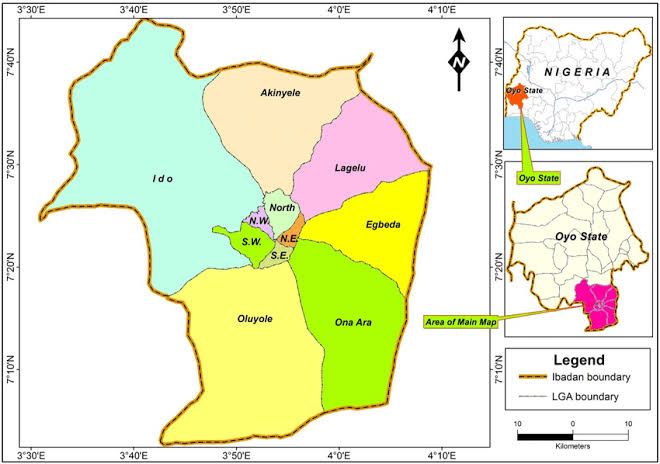
This layered governance explains why Ibadan has remained unusually stable despite its size and complexity. As one of West Africa’s largest traditional cities, it expanded not through rigid central planning but through adaptable governance that absorbed new settlements into its structure without chaos. Every new community finds its place within the hierarchy, either as a compound under a Mogaji or a village under a Baale, ensuring continuity of order.
Ultimately, Ibadan’s system reflects a philosophy of governance rooted in inclusion, hierarchy, and gradual responsibility. It is a living example of how African cities developed sophisticated administrative systems suited to their realities. Far from being archaic, the Ibadan model demonstrates that effective governance is not always about modern institutions alone, but about systems that grow with the people they serve.


Leave a Reply