Mapo Hall stands not merely as a building but as a symbol of Ibadan’s history, resilience, and collective identity. Perched majestically atop the ancient hill that overlooks the sprawling city, it has, for generations, served as a seat of administration, a venue for civic engagement, and a cultural beacon that reflects the spirit of one of Africa’s largest indigenous cities. Today, as urbanization accelerates and the demands of modernization intensify, a compelling question emerges: how can Ibadan preserve the soul of Mapo Hall while preparing it for the future?
Architect and social advocate, Idris Animasaun, offers an ambitious answer through his vision of transforming Mapo Hall and its adjoining properties into a world-class civic and cultural district. His proposal is not simply about constructing new buildings or beautifying public spaces; it is about telling the story of Ibadan in a manner that honours its past while embracing the possibilities of tomorrow.
There is historical significance about Mapo Hill. The journey to Mapo Hall is itself a passage through history. Ascending from Idi-Arere through one of Ibadan’s most prominent corridors, visitors encounter landscapes that have witnessed centuries of political, cultural, and social evolution. The imposing Oderinlo Statue that stands before the hall serves as a reminder of the city’s heroic past and enduring traditions.
Mapo Hill occupies a unique place in the history of Yorubaland. It is a site where traditional authority, colonial administration, and modern governance have intersected. The surrounding environment is rich with ancestral significance, making it far more than an ordinary urban space. Every stone, pathway, and structure contributes to a larger narrative about the emergence of Ibadan as a major centre of commerce, culture, and political influence.
The reimagination of Mapo Hall and environs goes beyond urban renewal, according to Idris. At first glance, the proposal to redevelop over 70,000 square metres around Mapo Hall may appear to be an urban renewal project. However, its true significance lies in its broader objectives. The vision recognizes that cities are not merely collections of buildings; they are living repositories of memory and identity.
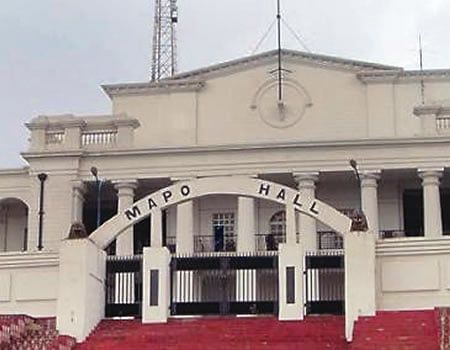
Many historic urban centres across the world have successfully revitalized their heritage districts by integrating cultural preservation with economic development. From Europe’s ancient city squares to Asia’s historic quarters, the most successful projects have demonstrated that heritage conservation and modernization are not mutually exclusive. Instead, they can reinforce one another when approached with sensitivity and foresight.
The proposed transformation of Mapo Hall presents a similar opportunity for Ibadan. Rather than allowing the area to continue deteriorating, it can be repositioned as a vibrant centre of cultural expression, tourism, learning, and recreation.
Mapo Hall and environs have potential to become cultural tourism hub. One of the most compelling aspects of the vision is the potential establishment of a comprehensive cultural tourism ecosystem. Mapo Hall already possesses the historical prestige necessary to attract visitors. What it lacks is a coordinated framework that fully showcases its significance.
Such a framework could include:
* Heritage trails that guide visitors through significant historical landmarks.
* Museums dedicated to the history of Ibadan and Yorubaland.
* Interpretation centres that use modern technology to tell historical stories.
* Public art installations celebrating notable figures and events.
* Amphitheatres and performance spaces for traditional and contemporary arts.
* Recreational parks and open spaces for residents and tourists.
* Cultural markets that promote indigenous crafts and local entrepreneurship.
These facilities would transform Mapo Hall from a destination visited occasionally into a dynamic cultural district active throughout the year.
There is part of the vision infrastructure and connectivity. Animasaun’s conceptual proposal for a tunnel connection toward Labiran reflects a deeper understanding of urban functionality. Connectivity remains a critical challenge within many historic city centres where narrow roads and ageing infrastructure struggle to accommodate modern transportation needs.
A carefully designed tunnel and integrated transportation network could improve accessibility, reduce traffic congestion, and unlock economic opportunities for surrounding communities. Such infrastructure would need to be executed with meticulous attention to heritage preservation, ensuring that historical assets remain protected while urban mobility is enhanced.
The goal should not be to impose modernity upon history but to create harmony between them.

Part of the vision is to protect ancestral heritage. Perhaps the most important aspect of this vision is its emphasis on preservation. The ancestral grounds surrounding Mapo Hall are sacred repositories of collective memory. They embody stories of leadership, resistance, cultural innovation, and community life.
Any intervention must therefore begin with extensive consultation involving:
* Traditional institutions.
* Historians and archaeologists.
* Cultural organizations.
* Community leaders.
* Urban planners and architects.
* Government agencies.
Development that ignores local heritage risks erasing the very identity it seeks to celebrate. Conversely, development rooted in cultural authenticity can strengthen community pride and ensure intergenerational continuity.
There are benefits of economic opportunities and social impact. A revitalized Mapo cultural district could become a powerful economic engine. Tourism generates employment across numerous sectors, including hospitality, transportation, entertainment, retail, and creative industries.
The project could create opportunities for:
* Tour guides and cultural interpreters.
* Artists and performers.
* Historians and researchers.
* Small business owners.
* Hospitality operators.
* Event organizers.
* Creative entrepreneurs.
Beyond economic benefits, the project would also foster civic pride, strengthen cultural education, and provide public spaces that encourage social interaction and community engagement.
The main objective is for Mapo Hall to become model for sustainable city building. The future of Mapo Hall should be viewed as a test case for how African cities can balance modernization with heritage conservation. Too often, development efforts prioritize short-term gains at the expense of cultural identity. Yet cities that lose touch with their history ultimately lose a vital part of their uniqueness.
By embracing sustainable planning principles, environmentally conscious design, and culturally informed architecture, the Mapo Hall project could become a model for urban regeneration throughout Nigeria and beyond.
In conclusion, Idris Animasaun’s dream for Mapo Hall is ultimately a dream about identity. It is a vision that recognizes that cities thrive not only through economic growth and physical infrastructure but also through the preservation of their stories, values, and heritage.
The hill of Mapo is more than a geographical elevation; it is a cultural summit upon which generations of Ibadan people have built their collective memory. Reimagining this historic landscape presents an opportunity to create a destination where history and innovation coexist, where culture fuels development, and where future generations can inherit a city that remains proudly rooted in its past while confidently embracing its future.
In preserving Mapo Hall, Ibadan preserves itself. In reimagining Mapo Hall, Ibadan redefines its future.


Leave a Reply