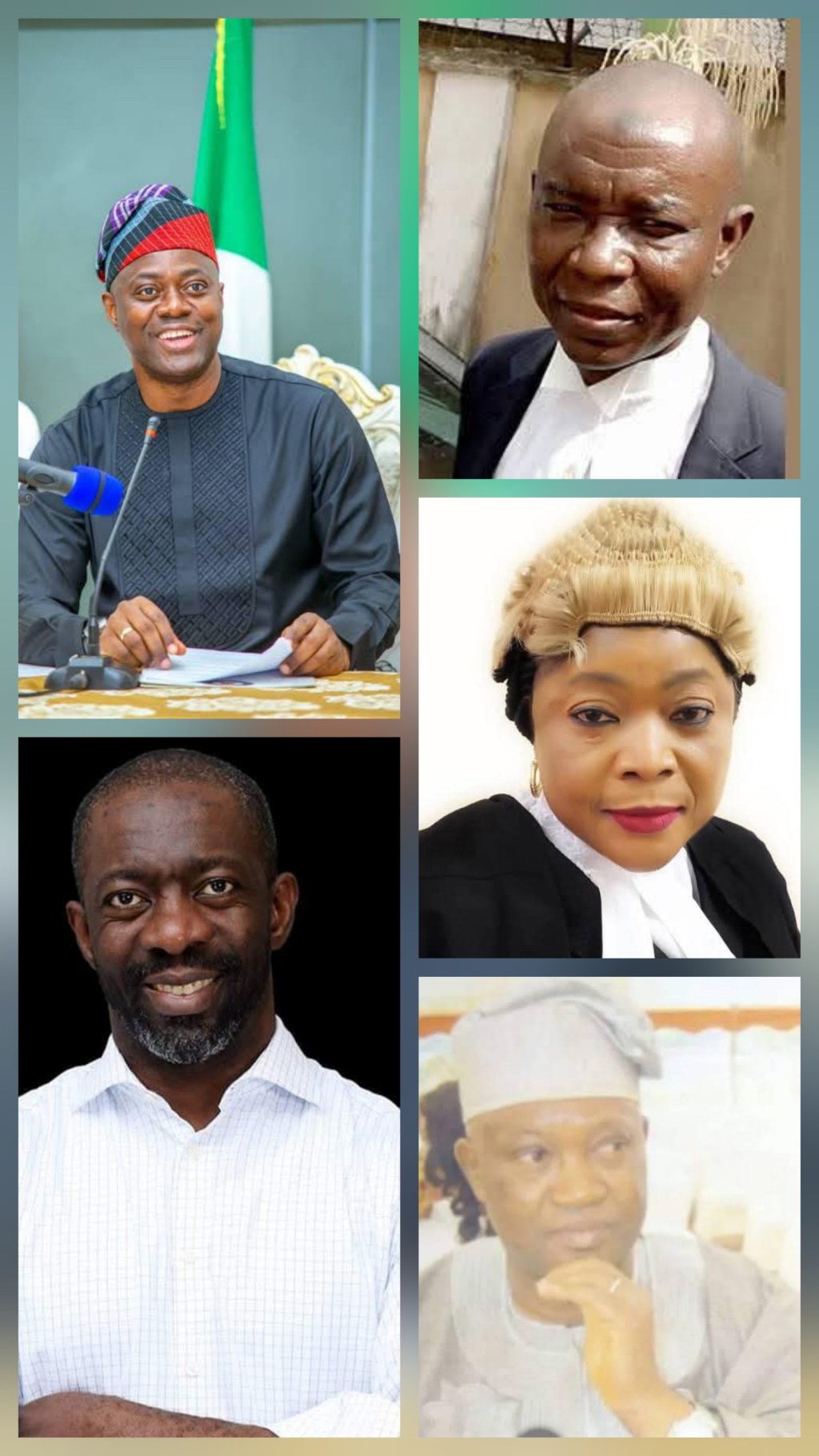
- The unforgettable story of three Muslim lawyers denied the opportunity to ascend the judicial bench
By Maroof Asudemade
As Governor Seyi Makinde approaches the end of his eight-year tenure in Oyo State, one question deserves a fresh and honest examination. Has his administration demonstrated the religious equity and inclusiveness that a pluralistic society such as Oyo State deserves?
Beyond the construction or renovation of mosques, the employment of Islamic clerics and the occasional public appearances of the governor with Muslim religious leaders, there is a more fundamental test of fairness. The fundamental test is in the distribution of political opportunities, appointments, influence and access to public institutions.
Governance is not an exercise in religious symbolism. Neither should the appointment of an Imam or the provision of facilities for Muslim worship be presented as sufficient evidence of religious equity. The real test is whether Muslims enjoy equal opportunities in the corridors of power, public service and institutions of government under Governor Seyi Makinde.
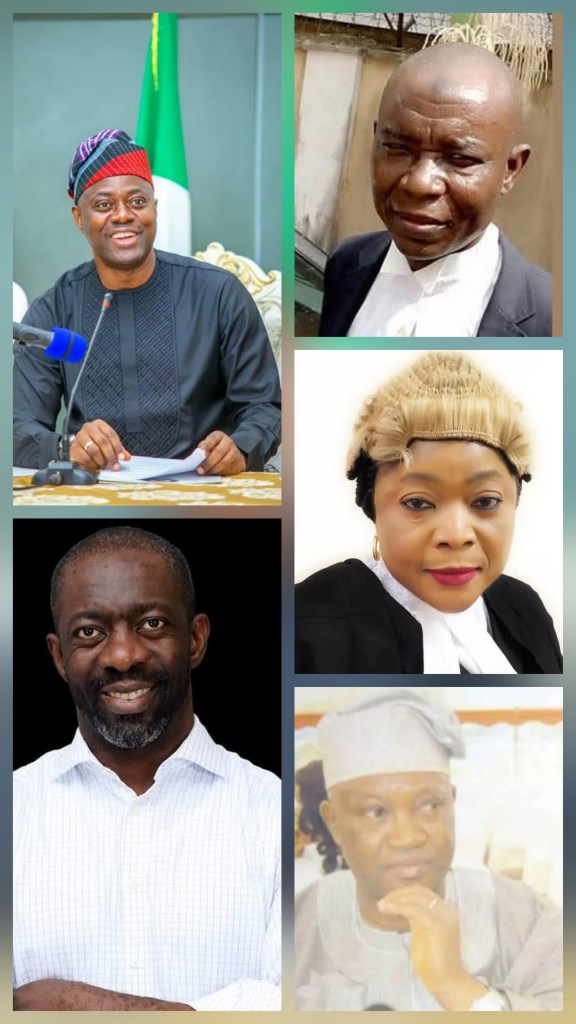
Unfortunately, the controversy surrounding the aborted judicial elevation of three distinguished Muslim lawyers under Makinde’s administration remains a sad chapter in this conversation. The names of Alhaja Fatima Badrudeen, Prince Adetunji Wasiu Gbadegesin and Barrister AbdulRazaq Bolaji Agoro should not disappear from the public memory of Oyo State. Their stories became the centre of a serious religious discrimination controversy in 2020 and 2021, following their emergence as the most qualified candidates for appointment to the Oyo State High Court bench.
According to the account presented by the Muslim Community of Oyo State (MUSCOYS), the Judicial Service Commission had invited applications from qualified lawyers to fill three vacancies. Thirty-six lawyers reportedly participated in the selection exercise, which included an examination with a 70 per cent qualifying benchmark.
The selection arrangement reportedly provided for the most qualified candidates from three categories: the state judiciary, the Ministry of Justice and the Nigerian Bar Association. The three qualified and preferred candidates were Muslims. However, MUSCOYS alleged that Governor Makinde, through his Attorney-General and Commissioner for Justice, Professor Oyelowo Oyewo, directed the withdrawal of the selection process from the National Judicial Council for reconsideration.
In a letter dated July 20, 2020, the Attorney-General communicated the governor’s directive to the Chief Judge, requesting that the selection process be returned to the Judicial Service Commission. In its open letter to the governor dated May 4, 2021, MUSCOYS alleged that the objection to the original list was principally because all three qualified candidates were Muslims. The community further alleged that after the process was revisited, the commission recommended two Muslims and two Christians, but that following the deaths of two of the Muslim nominees, Christian candidates were substituted for them.
These were grave allegations which demanded a transparent and convincing explanation. The controversy became even more poignant following the deaths of the three lawyers in succession. Fatima Badrudeen died in December 2020, Wasiu Gbadegesin died in April 2021, while Bolaji Agoro died in July 2021, few months apart.
The Political Awareness Group (PAG), an association of Muslim professionals and technocrats, subsequently raised the matter at a press conference in Ibadan. Through its Vice-Chairman, Dr Moruf Yusuf, PAG questioned why the lawyers, who reportedly distinguished themselves in the selection exercise, had not secured their appointments. The organisation called on the Makinde administration to immortalise the deceased lawyers, compensate their families and demonstrate fairness in subsequent judicial appointments.
PAG also questioned the circumstances surrounding the withdrawal of the original selection list and called for equitable representation in government appointments and employment opportunities.
The death of the three lawyers was undoubtedly tragic. Their deaths were a sufficient reason to conclude that the controversy or the government’s actions caused their deaths. The justifiable public concern remains the unresolved questions surrounding their judicial appointments.
The allegations made by MUSCOYS and PAG are not inconsequential expressions of religious grievance. They concern the integrity of a public appointment process and the confidence of a substantial religious community in the impartiality of government.
The Judicial Service Commission attributed the delay to a petition against the selection process, the COVID-19 pandemic and the industrial action by judicial workers. It maintained that the procedure was merit-driven and denied that religious considerations influenced the process.
These explanations deserve to be acknowledged. But they do not erase the concerns raised by MUSCOYS and PAG or make the demand for transparency unreasonable. A government that prides itself on inclusiveness should be willing to address such controversies with documentary evidence and institutional accountability, rather than allowing them to remain unresolved in public consciousness.
The controversy has, therefore, acquired renewed political relevance with Makinde’s declaration of former Commissioner for Finance, Bimbo Adekanmbi, as his preferred successor for the 2027 governorship election. Adekanmbi, a Christian, has emerged as the candidate of the Allied Peoples Movement (APM), with the incumbent governor openly identifying him as his preferred choice.
There is nothing inherently objectionable about a Christian aspiring to govern Oyo State. Neither should anyone’s religious affiliation disqualify them from seeking public office. The issue, however, is the broader question of religious balance, political understanding and the perception of inclusiveness in a state where both Muslims and Christians have genuine expectations of equitable representation.
The governor himself is a Christian. His preferred successor is also a Christian. After eight years of his administration, it is reasonable for citizens to examine whether the political succession arrangement reflects the religious diversity of the state. If there were understandings among political stakeholders concerning religious balancing in the succession process, the public deserves clarity about them. Such understandings should not be assumed to be binding constitutional arrangements, but neither should valid concerns about representation be casually dismissed.
The question is not whether Adekanmbi is qualified to govern. It is whether the governor’s approach to succession demonstrates sufficient sensitivity to the concerns of Muslims who believe that their representation in the highest political office deserves consideration. The judicial controversy, allegedly leading to the deaths of Badrudeen, Gbadegesin and Agoro, makes that question particularly difficult to be swept under the carpet.
There is a difference between accommodating a religious community and ensuring that its members enjoy equal opportunities in public life. Constructing mosques, employing Imams, facilitating religious activities and attending Islamic functions may demonstrate recognition of Muslim religious needs. But these gestures cannot automatically answer questions about balance in appointments, promotions, judicial representation and political inclusion.
It is therefore insufficient for any administration to point to its religious engagements as conclusive evidence that it has treated all communities fairly. The three lawyers’ controversy remains a painful reminder of why transparent appointment procedures are essential. The circumstances surrounding their selection, the withdrawal directive, the subsequent substitutions and the government’s explanations deserve to remain part of the public record. Makinde cannot simply expect the passage of time to extinguish the questions raised by MUSCOYS and PAG.
As the Makinde administration approaches its final months, it is glaring that the Muslim community has not had a fair deal in his government. He appears pretentious about his considerations for Muslims. The governor owes the people of Oyo State a legacy of fairness that transcends religious boundaries. The allegations surrounding Badrudeen, Gbadegesin and Agoro remain an important test of that principle.
The governor’s preference for Adekanmbi has introduced another dimension to the debate about religious representation in the state’s political future. Whether Makinde considers these concerns politically inconvenient or not, they deserve answers. Ultimately, the measure of a governor’s commitment to religious harmony is not the number of mosques constructed, the number of Imams employed or the frequency of his appearances at religious gatherings. It is whether every citizen, Muslim or Christian or traditional worshipper, can reasonably expect fairness, dignity and equal opportunity under his administration.
The Muslim community has suffered enough underhand neglect in the hands of Governor Makinde and this should not be allowed to continue by rejecting Adekanmbi who is Makinde’s anointed candidate. It will be in the best interest of both Muslims, traditional worshippers and Christians to queue behind Senator Sharafadeen Alli who will ensure there are equity, balance, fairness and justice in the ways adherents of these religions are treated.


Leave a Reply