By Maroof Asudemade
There is a peculiar disease in Nigerian politics that turns yesterday’s accusers into today’s admirers, yesterday’s villains into today’s heroes, and yesterday’s alleged fraudsters into today’s political benefactors. The symptoms are unmistakable that a sudden disappearance of righteous indignation, a convenient amnesia about yesterday’s accusations, and an extraordinary discovery that the very people one once condemned are now worthy of political partnership.
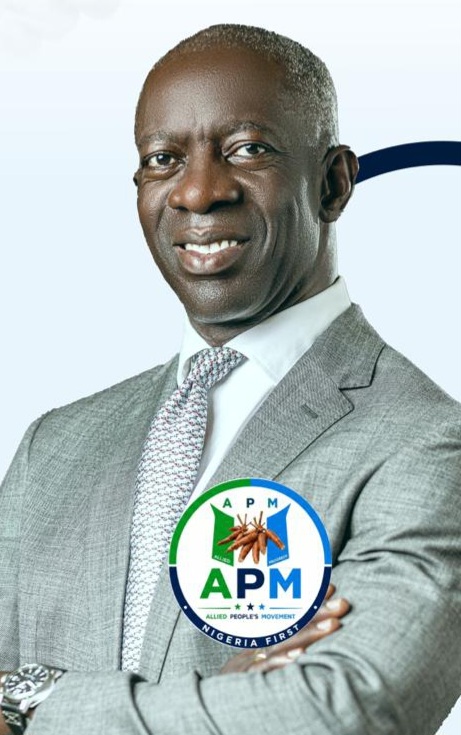
The sealed political romance between Bimbo Adekanmbi, the Allied Peoples Movement (APM) governorship candidate for the 2027 election in Oyo State, and Governor Seyi Makinde’s political establishment presents an interesting case study in this familiar Nigerian political pathology.One question begs for an answer. At what point did Governor Seyi Makinde move from being the head of a government Adekanmbi described as operating an “alternative fraud approach” to becoming a political partner whose administration no longer appears to attract the same ferocious attention?
Was there a formal investigation that vindicated the governor? Were the alleged irregularities exposed by Adekanmbi in 2021 investigated and disproved? Did the Oyo State Government publish the financial disclosures he demanded? Or has political convenience achieved what no public document has established; that is a complete acquittal in the court of Adekanmbi’s opinion?
In 2021, Adekanmbi was not speaking like a politician who considered Governor Makinde’s financial management beyond reproach. Far from it. His comments, as reproduced from a magazine interview, were pointed, combative and damning.Responding to the government’s claims about reducing Oyo State’s debt profile and the effectiveness of its Alternative Project Funding Approach (APFA), he declared:
“The alternative project funding approach, what I call it is an alternative fraud approach.”
That was no mild expression of disagreement over accounting procedures. It was a serious allegation against the credibility of a public financing arrangement operated by the government of a sitting governor.
Adekanmbi went further, arguing that the state could have obligations arising from contractor-backed financing arrangements that were not fully reflected in conventional debt figures. He questioned the use of the state’s internally generated revenue as a guarantee for contractors seeking bank financing and alleged that project costs were inflated.He also challenged the government to disclose the components of its debt, the costs of awarded contracts and the identities of companies that participated in the bidding process.In his own words:
“What is the cost of the contract? Who are the people that bid?”
These were serious questions to raise about public expenditure. Indeed, any serious advocate of accountable government should insist that public borrowing, contingent liabilities, procurement procedures and infrastructure costs be open to independent investigation. But if Adekanmbi believed these questions were important enough to raise in 2021, what has happened to their importance in 2026? Have the questions been answered? Has he obtained evidence that changed his assessment? Or has the political calculation changed while the public remains none the wiser?
The problem is not that politicians cannot change their minds. They can, and sometimes they should. The problem is changing positions without explaining why, especially when the original position involved serious allegations about the management of public resources.
Today, Adekanmbi has been presented as the APM’s governorship candidate for 2027, while his political relationship with Makinde’s camp has become a subject of public debate. The irony is that the same politician who once demanded that the government open its books to public examination must now explain how his former verdict sits alongside his present political alignment. If Makinde’s financial management was sufficiently questionable in 2021 to warrant Adekanmbi’s description of APFA as an “alternative fraud approach”, what has changed to make cooperation with the same political establishment acceptable today?
Perhaps Adekanmbi has discovered new facts. Perhaps the government has provided answers that were previously unavailable. Perhaps he has reconsidered his earlier assessment after examining additional evidence. Any of these explanations is possible. But which is it? Oyo people cannot be expected to guess. If the earlier allegations were mistaken, Adekanmbi should have the courage to say so and explain the evidence that persuaded him to change his mind. If the allegations remain valid in his estimation, he should explain how he reconciles them with his present political relationship.
Silence cannot substitute for accountability, and political association cannot serve as proof of financial probity. A man who once demanded answers from a government cannot reasonably expect the public to stop asking questions merely because he has moved closer to that government.
Has Makinde received an acquittal without a trial? The language of the courtroom offers an irresistible analogy. Adekanmbi once arraigned Makinde’s funding strategy in the court of public opinion. He challenged the government’s debt-reduction narrative, questioned its financing arrangements and alleged that the public could be left with obligations that were not adequately represented in the state’s conventional debt figures. Now that their political paths appear to have converged, the electorate is entitled to ask whether the prosecution has been withdrawn, the evidence abandoned or the verdict quietly reversed.
“Has Makinde been discharged and acquitted in Adekanmbi’s private court of opinion? If so, on what grounds?”
There is, of course, no reason to presume that an allegation made in a magazine interview was proven merely because it was forcefully expressed. Adekanmbi’s 2021 statements remain allegations requiring independent verification. Equally, however, there is no reason to presume that those concerns have been resolved merely because the politicians involved have now found themselves on the same side of the political divide. The financial questions Adekanmbi raised are bigger than the personalities involved. They concern the use of public revenue, the disclosure of government liabilities, the cost of infrastructure and the protection of taxpayers from opaque financial arrangements.
One of the most troubling features of Nigerian politics is the tendency to apply different standards to the same conduct depending on who occupies the position of political friend or adversary. When politicians are opponents, every government contract becomes suspicious, every debt figure invites forensic examination, and every financial arrangement is presented as evidence of administrative failure. But when the same politicians become allies, yesterday’s scandals can suddenly become tomorrow’s misunderstandings. This is the politics of selective outrage.
Adekanmbi’s present alignment with Makinde’s political camp raises the question of whether the financial concerns he expressed in 2021 remain matters of principle or were merely instruments of political combat. A principled critic does not have to remain an enemy forever. But a principled critic must be willing to explain what has changed. If new evidence has vindicated the government, let that evidence be presented. If the government has corrected the practices he criticised, let the corrections be identified. If he has revised his understanding of APFA, let him explain the revised position. Without such an explanation, the public is left to wonder whether the earlier criticism was driven by a commitment to transparency or by the political circumstances of the time.
What does this say about Adekanmbi’s credibility? The governorship is not a prize for the politician who can forge the most convenient alliances. It is a position of public trust requiring judgment, consistency, intellectual honesty and a demonstrable commitment to the public interest. Adekanmbi’s challenge is therefore not simply to explain why his political relationship with Makinde’s camp has changed. He must also demonstrate that his principles have not changed merely because his political circumstances have.
There are at least four issues he needs to address. First, the question of consistency. If he considered APFA sufficiently troubling in 2021 to describe it as an “alternative fraud approach”, he owes the electorate a clear account of whether that assessment still stands. If it does not, he must explain why.
Second, the question of evidence. Did the Oyo State Government provide the debt components, contract details and procurement information he demanded? If so, what did the disclosures establish? If not, on what basis has he become comfortable with the political relationship that now exists?
Third, the question of principle. Does Adekanmbi apply the same standards of transparency to political allies that he applies to political opponents? A candidate who demands accountability only when it is politically advantageous cannot convincingly claim to represent an uncompromising commitment to good governance.
Fourth, the question of trust. Voters need to know whether his policy positions are rooted in evidence and conviction or whether they can be quietly abandoned when political relationships change. His explanation or failure to provide one will shape public judgment on this issue.
These questions identify a credibility problem for Adekanmbi that he must address if he wishes to be taken seriously as a candidate for governor. There is a particular irony in a politician who once demanded investigative journalism into a government’s finances now finding himself politically aligned with the same establishment. One can almost imagine the questions from that 2021 interview being carried into the next political meeting: What are the components of the debt? What is the cost of the contract? Who are the people who bid? What financial guarantees have been provided? What happens to the state’s revenue when contractors must be repaid?
These questions were important then. They remain important now. The electorate would be entitled to ask whether Adekanmbi still asks them in private, whether he has received satisfactory answers, or whether the questions have become inconvenient relics of a more confrontational political past. And the political relationship has indeed evolved into one in which Adekanmbi is increasingly dependent on Makinde’s goodwill or political influence. It would not be premature to assert a formal godfather–godson arrangement between Makinde and Adekanmbi, and the possibility of political dependency is a salient subject for investigation where the facts support it.
A governorship candidate must demonstrate independence of judgment. He should be able to cooperate with political actors without surrendering his responsibility to question them. Otherwise, voters must ask a difficult question: if Adekanmbi cannot publicly reconcile his former criticisms with his present political alignment, how will he exercise independent judgment when the decisions of powerful political associates conflict with the interests of Oyo State?
The 2027 governorship election should not become a competition in political opportunism, where candidates condemn an administration one year and embrace it the next without explaining the transformation. Oyo State has serious questions to confront: the transparency of public borrowing, the management of infrastructure contracts, the sustainability of government expenditure, the protection of internally generated revenue and the disclosure of financial obligations that may extend beyond a governor’s tenure.
These issues require more than political slogans. They require accessible records, credible evidence and candidates willing to state their positions clearly, even when doing so may offend their political associates.


Leave a Reply