By Maroof Asudemade
When Bimbo Adekanmbi, the governorship candidate of the Allied Peoples Movement (APM) and a person widely renowned as Governor Seyi Makinde’s political proxy, declared that he would continue the governor’s legacy if elected in 2027, many might have dismissed it as the familiar rhetoric of a candidate seeking to inherit political power. But his subsequent assertion that no state could grant autonomy to local governments has given his declaration a far more worrisome meaning.
Adekanmbi has, perhaps unwittingly, offered Oyo residents a glimpse of what his administration could mean for the future of grassroots governance. If his understanding of local government autonomy reflects the policy direction he intends to pursue, then Oyo citizens at the grassroots, comprising the 33 local government areas of Oyo State should be preparimg for total annihilation of grassroots governance in the state.
Adekanmbi’s position is particularly revealing because it echoes Makinde’s long-standing opposition to what he considers an impractical demand for local government autonomy. The governor’s administration has faced persistent criticism over its tight grip on local government finances and administration, with allegations that council chairmen cannot freely spend their allocations without obtaining approval from the state government.
The implication is enormously grave. A local government that cannot independently determine its spending priorities, execute projects according to local needs and exercise meaningful control over its finances is local government in name, but state government by proxy in practice. The purpose of local government is not to serve as an administrative appendage of the governor’s office. It exists to bring governance closer to the people, address community-specific challenges and ensure that development does not remain concentrated in state capitals or major urban centres. Governor Makinde has taken governance away from the grassroots and has been made slavish to the state.
When this constitutional responsibility is subordinated to the preferences of a state governor, grassroots democracy becomes an empty slogan. Consider the condition of rural roads, drainage systems, markets, primary healthcare facilities and other community infrastructure across Oyo State. These are areas where responsive local councils should be making visible interventions. Yet, when elected council chairmen must depend on the governor’s approval before committing funds to local priorities, bureaucratic bottlenecks and political considerations can frustrate projects that should ordinarily require little delay.
If Adekanmbi becomes governor and faithfully continues this model as he has echoed, the remains of Oyo’s local governments are already prepared for burials. Oyo local government administration is trapped in a system where elected chairmen bear the blame for poor performance without possessing the financial freedom required to deliver results. They would be held accountable by their constituents for failures over which they have limited control, while the real power to determine expenditure would remain concentrated elsewhere.
That is the danger of Adekanmbi’s promise to preserve Makinde’s legacy: the continuation of a system that critics say weakens local government independence and reduces elected council officials to political appendages of the state administration.
There is also a constitutional dimension to this controversy. The Supreme Court of Nigeria, in its July 11, 2024 judgment on local government financial autonomy, reinforced the constitutional status of local governments and ruled against state governments’ control of local government funds through joint accounts. The judgment strengthened the principle that democratically elected councils must enjoy meaningful financial independence. It is therefore difficult to reconcile an unqualified rejection of local government autonomy with the direction of constitutional jurisprudence in Nigeria.
So far, Governor Makinde has shown that he is an unrepentant disrespecter of rule of law by his refusal to allow the Supreme Court judgment on local government autonomy to stand in Oyo. Allowing Adekanmbi to continue the disrespect of rule of law will not portray Oyo people in a good light among the comity of citizens. Which is why they must reject Bimbo at the polls in 2027.
To be fair, the question of autonomy does not mean that local governments should operate without accountability, financial controls or compliance with the law. Public funds must be properly audited, and elected chairmen must be held responsible for corruption, waste and abandoned projects. But accountability is not the same as subordination, just as supervision cannot be used as a justification for denying constitutionally recognised institutions the ability to perform their functions. Oyo State itself needs supervision and accountability and Governor Makinde has been critical of all attempts to call him to question on his mishandling of state finances.
Adekanmbi must explain what he means when he says no state can grant local government autonomy. By that admissive statement, he is endorsing the restrictive financial and administrative arrangements that have characterised local government administration in Oyo State under Governor Makinde. Bimbo intends to preserve the existing system, and the people should know the full implications before casting their votes for him.
The 2027 governorship election should therefore be more than a contest of personalities, party structures and political endorsements. It should be a referendum on the kind of local government system Oyo residents want: councils that can respond promptly to community needs, or councils that must continually look over their shoulders towards the governor’s office before acting. Adekanmbi cannot promise continuity and then expect the electorate to ignore the policies and practices he intends to continue. His declaration has placed the issue squarely before the people.
For the 33 local governments of Oyo State, the stakes could hardly be higher. Another four years of restrictive control, as Adekanmbi proposes, would further weaken grassroots initiative, delay development and diminish the practical value of electing local representatives. Oyo people must therefore ask a simple but consequential question: if the man seeking to govern the state has already indicated that he intends to preserve the incumbent’s legacy and questions the possibility of local government autonomy, what assurance do the councils and their residents have that anything will change?
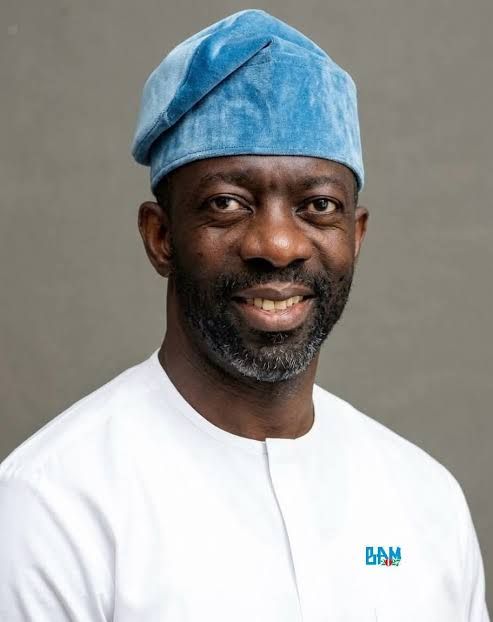
Adekanmbi has provided a convincing answer that he doesn’t believe in local government autonomy like his principal, meaning that his candidacy raises a worrisome concern. It means that his emergence in 2027 would mean not a new beginning for Oyo’s local governments, but the extension of a system in which grassroots governance will be totally annihilated in Oyo State.


Leave a Reply