By Maroof Asudemade
If Governor Seyi Makinde wishes to be taken seriously as a presidential aspirant, he must understand that the presidency is not won by manufacturing public outrage, throwing around astronomical figures or portraying the incumbent federal administration as an enemy of the Nigerian people. It demands credibility, intellectual honesty and, above all, the ability to distinguish political propaganda from verifiable facts.
Unfortunately, Makinde’s recent claim concerning Nigeria LNG Limited (NLNG) proceeds raises serious questions about the accuracy of his public pronouncements and the manner in which he deploys financial information in the pursuit of his political ambitions. This writer thinks Makinde is deliberately manipulative in his claims to set Nigerians against President Bola Tinubu.
During his recent public engagement, Makinde alleged that the Federal Government under President Bola Ahmed Tinubu was owing each state of the federation ₦250 billion in NLNG proceeds. He further claimed that the money had already been spent and that payment would not be made until after the 2027 general elections. To drive home his argument, he asked whether the election was more important than the Nigerian people, a question clearly calculated to provoke public anger against the Tinubu administration.
But beneath the dramatic rhetoric lies a fundamental question that Makinde must answer: where are the verifiable figures and documentary evidence establishing that every state in Nigeria is entitled to ₦250 billion in NLNG proceeds that the Federal Government has allegedly withheld? A governor making such a serious allegation against the Federal Government cannot reasonably expect Nigerians to accept it simply because he has presented it with the confidence of someone who knows what he is talking about. Confidence is not evidence, political rhetoric is not financial documentation, and an allegation does not become a confirmed fact merely because it is delivered from a public podium.
The Presidency has since challenged Makinde’s assertion. In a statement issued on Sunday, October 18, 2026, Bayo Onanuga, Special Adviser to President Tinubu on Information and Strategy, questioned the financial basis of the governor’s claim and presented figures that raise substantial questions about its plausibility.
According to Onanuga, paying ₦250 billion to each of Nigeria’s 36 states would amount to ₦9 trillion for the states alone, excluding the Federal Government, the Federal Capital Territory and the 774 local government councils. The Presidency further explained that, under the Federation Account revenue-sharing formula it cited, states receive 26.72 per cent of distributable revenue. For the states’ combined share to reach ₦9 trillion, the total NLNG dividends available for distribution would have to exceed ₦33.68 trillion, equivalent to approximately $25 billion, in a single declaration.
Onanuga maintained that NLNG had never paid $25 billion in dividends to the Federation in a single payout. He also stated that the company had paid approximately $21.5 billion in dividends to the Federation over 25 years, with less than $3 billion realised since Tinubu assumed office. These are figures that demand serious consideration.
Since the Presidency’s account is deemed accurate, Makinde’s claim raises fundamental questions about the source of his calculation and the basis on which he arrived at ₦250 billion per state. Which specific dividend declaration is he referring to? What was the total amount received by the Federation? When was the money received, and what official decision established the amount allegedly due to each state? These are straightforward questions that should have straightforward answers.
When President Bola Tinubu gave 30 billion naira in aid to Governor Seyi Makinde over Bodija explosion, Makinde refused to make a publicity of the gesture until two years later when Ayodele Fayose blew the whistle on him. Since financial allocations to Oyo State and other states have been quadrupled, Governor Makinde did not acknowledge the quadruple percentage in the monthly allocation until shame pushed him to accept that though he’s receiving quadrupled monthly allocation, he’s not shrewd as a state administrator to use the funds to eradicate poverty among his citizens.
It is important, however, that the controversy of LNLG dividends be resolved through the publication and examination of the relevant financial records rather than by accepting either side’s assertions without scrutiny. The Presidency should make the necessary documentation available, while Makinde should produce the evidence supporting his claim. Nigerians deserve nothing less than transparency from both parties.
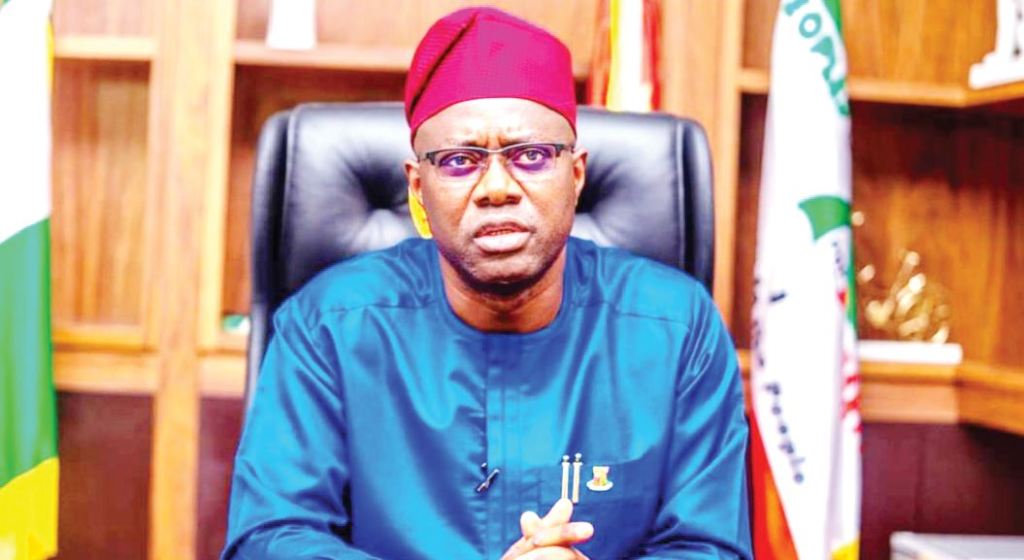
What makes this controversy particularly consequential is the political context in which the allegation was made. Makinde is not merely a governor commenting on a disagreement over revenue allocation; he is also pursuing a presidential ambition ahead of the 2027 general elections. His criticism of Tinubu is therefore bound to attract political attention, and he has every right to challenge the President’s policies, question government expenditure and demand accountability. Such criticism is a legitimate component of democratic governance.
However, there is a clear distinction between exposing a genuine financial irregularity and presenting a disputed financial claim in a manner that creates the impression of established government wrongdoing. There is also a difference between holding the Federal Government accountable and using an allegation to suggest that the government has deliberately deprived every state of an enormous sum of money.
Makinde’s reported assertion went beyond questioning the management of NLNG proceeds. By claiming that the money had already been spent and that payment would be postponed until after the elections, he effectively presented a narrative of deliberate financial deprivation for political reasons. Such a serious allegation requires compelling evidence. The public should not be expected to accept it simply because it provides ammunition against the incumbent President.
The timing and framing of the governor’s allegation may understandably lead his critics to interpret it as an attempt to generate public resentment against Tinubu. Nevertheless, the question of motive should not distract from the more important issue: whether the allegation is supported by verifiable facts. If Makinde possesses documentary evidence establishing his claim, he should publish it and allow Nigerians to examine it. If the Presidency’s figures are inaccurate, he should demonstrate precisely where its calculations are wrong. But if his figures cannot withstand financial scrutiny, he should be prepared to correct the public record.
The Nigerian people are already grappling with serious economic and social challenges. Citizens are concerned about the cost of living, employment, infrastructure, education, healthcare and security. In these circumstances, public officials have an obligation to communicate financial information responsibly, particularly when their statements involve trillions of naira and the distribution of public revenue.
The allegation that the Federal Government is withholding ₦250 billion from every state is not an ordinary political talking point. It creates the impression that an enormous sum has been identified, that every state has a definite entitlement to a specified amount, and that the Federal Government is deliberately delaying payment for electoral reasons. Each of these propositions requires evidence.
Was the money formally declared and received? Was the amount allocated to the states through the appropriate revenue-sharing process? Was a definite payment schedule approved? Was there an official decision to postpone payment until after the 2027 elections? These are not technicalities. They are the very questions that determine whether Makinde’s allegation accurately represents the state of affairs.
Until the relevant documents are produced, Nigerians should be cautious about accepting the claim as an established fact. Political competition must not become an excuse for presenting unverified allegations as settled financial truths.
Makinde cannot reasonably expect to be taken seriously as a credible alternative to the incumbent administration while resisting the same scrutiny he directs at President Tinubu. If he believes that the Federal Government has mishandled NLNG proceeds, he should publish the relevant financial records. If the ₦250 billion figure represents a confirmed entitlement for every state, he should identify the official decision establishing that entitlement. If the funds were received but not distributed, he should disclose the amounts, dates and relevant records. And if the Federal Government has formally announced that payment will be deferred until after the elections, he should provide the communication establishing that decision.
These are not partisan demands. They are basic requirements of accountability when a public official makes a serious allegation about public finances. Makinde should not be allowed to substitute political indignation for documentary proof.
The larger concern is the possibility that an important financial controversy could become another battleground in the contest for political power, with public anger taking precedence over factual accuracy. Nigerians have witnessed enough political grandstanding to know that not every dramatic allegation represents the complete truth.


Leave a Reply