By Maroof Asudemade
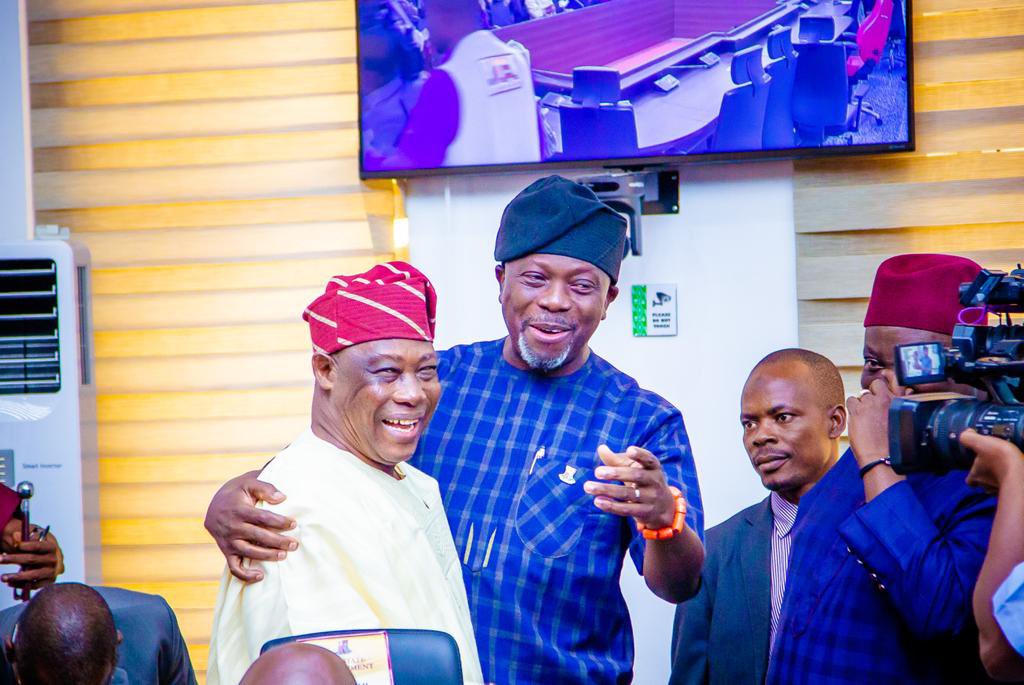
Governor Seyi Makinde has a curious way of trying to sound mocking. More often than not, his attempts at sarcasm end up producing statements that may become uncomfortable even when replayed by him to himself.
During one of his recent public outings, Makinde spoke glowingly about his “best eleven” — the team of men and women around him whom he said he trusted to keep the machinery of government running whenever he travelled. He particularly praised his deputy, Bayo Lawal, and other members of his inner team for holding forth well in his absence.
But the governor’s succession politics has thrown up an uncomfortable question: if these people constitute his “best eleven”, why has none of them been trusted enough to succeed him?
For almost eight years, Makinde has had commissioners, advisers, technocrats, political appointees and other senior officials working closely with him. These are the people who have supposedly understood his vision, implemented his policies and defended his administration. If they are truly the best eleven he says they are, one would reasonably expect at least one of them to possess the political and administrative capacity to inherit the baton.
Yet, when the decisive moment came, Makinde looked beyond that celebrated eleven. Instead, Bimbo Adekanmbi emerged as the governorship candidate of the Allied Peoples Movement, with Muftau Open Salawu as his running mate. Adekanmbi, a chartered accountant and former Commissioner for Finance, brings a financial background to the ticket, while Open Salawu has a professional background in engineering and public service.
There is nothing inherently wrong with choosing people from outside an incumbent governor’s immediate political circle. The real question is why Makinde’s much-publicised “best eleven” suddenly became inadequate for the most important assignment of all — sustaining his political and governance legacy beyond 2027.
Did the governor genuinely conclude that none of the people who have served beside him for nearly eight years is good enough to take over from him? If so, what does that say about the quality of the team he has spent years presenting to Oyo people as his best? Or is there another explanation?
Calling his inner team “best eleven” is itself a mockery of their intelligence and a ridicule of their personality. Calling the guys “best eleven” is a euphemism for “yesmen – hold-garment – gbẹwudani”.
Adekanmbi’s accounting and financial background naturally makes his selection particularly significant and suspecting. It has inevitably fuelled questions about whether financial considerations played any role in the choice. Those questions are tenable proofs that there may be wrongdoing, and allegation of financial misconduct on the part of Governor Makinde, which is why Adekanmbi is said to be preferred as Makinde’s successor to use his professional background to cover up Makinde’s alleged financial misdeeds.
But politics is about perception as much as presentation. When an outgoing governor bypasses his own highly celebrated inner team and backs an accountant as his preferred successor, people are entitled to ask what qualities informed the choice and what precisely he expects the successor to preserve.
There is another irony. Makinde has repeatedly projected himself as a governor who does not need a godfather and has suggested that his successor should be allowed to govern freely. But when an incumbent governor becomes deeply involved in determining who should inherit his political structure, it is inevitable that Oyo people will examine whether the arrangement is about continuity of governance, continuity of political influence, or both.
The contradiction becomes even more glaring when one considers the governor’s own rhetoric. If his “best eleven” are indeed the finest collection of professionals and political minds available to him, then the succession process should have been an opportunity to demonstrate their value. Instead, the biggest vote of confidence Makinde could give them appears to be a vote of non-selection. That is the real paradox.
A coach who spends eight years telling spectators that he has assembled his best eleven would ordinarily be expected to entrust the next match to one of his trusted players. If he suddenly goes outside the dressing room to recruit a new striker, the spectators are entitled to ask what happened to the players he had spent years praising.
For Makinde, the answer cannot simply be that Adekanmbi and Open Salawu are competent. The more fundamental question is what became of the competence of the “best eleven” he has repeatedly asked Oyo people to admire.
Perhaps the governor has an explanation. Perhaps his “best eleven” was never meant to be a succession team. But if that is the case, he owes Oyo people an explanation of what exactly he meant when he presented them as the team he trusted to deliver good governance.
After all, a vote of confidence means little when, at the first opportunity to pass the baton, the person giving the vote of confidence chooses somebody else. That singular decision may have done some damage to the psyche of the members of Makinde’s “best eleven”.
 The Asudemade Perspective
Leave a comment