By Maroof Asudemade
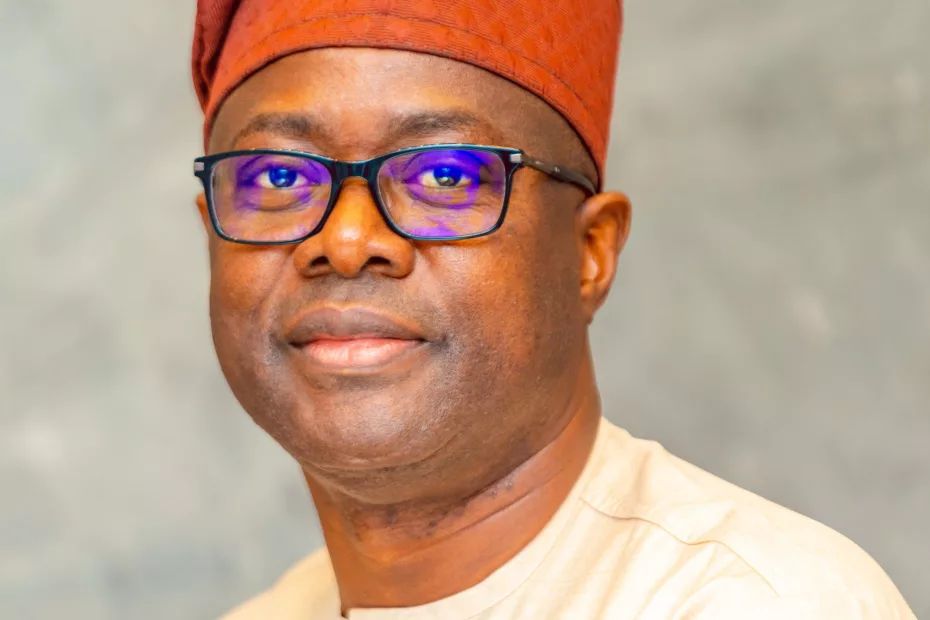
Yesterday, Governor Seyi Makinde, now presenting himself as the APM presidential candidate, commissioned his campaign office in Abuja and declared that he was ready to “reset” Nigeria. One is tempted to ask: reset Nigeria from what, and towards what?
Makinde says he would retain fuel-subsidy removal but make it beneficial to Nigerians. That sounds attractive. But the obvious question is: how? And, more importantly, what evidence do we have that he possesses the capacity to deliver such a transformation?
Governor Makinde has governed Oyo State for almost eight years. Oyo is not Nigeria. But it is a sufficiently large and complex state to provide a reasonable test of leadership capacity. The Yoruba have a saying: “He who wants to give another person a cloth must first show what he is wearing.” So, what exactly has Makinde reset in Oyo?
To be fair, his administration has delivered few notable projects. His government can point to roads, the airport upgrade, agribusiness initiatives, education interventions and the snail-speed Oyo State Independent Power Project. His own 2025 State of the State address listed more than 100 kilometres of feeder roads, the Fasola and Eruwa agribusiness initiatives and other investments.
But projects are not the same thing as economic transformation. One important test is the state’s ability to generate the resources required to sustain development. Oyo’s 2024 Citizens Accountability Report recorded actual IGR of ₦65.29 billion, against a budget of ₦92.79 billion — just 70 per cent performance. The state’s own 2025 debt strategy still projected reliance on substantial borrowing, including ₦152.05 billion in financing for 2025.
Even the administration’s much-advertised economic progress therefore requires qualification. The state has improved in some areas, but it has not become the kind of economically transformed, internally self-sustaining powerhouse that would make the claim to “reset Nigeria” self-evident.
And that is the central problem with Makinde’s presidential proposition. Nigeria needs more than a governor who can execute projects. It needs a leader capable of undertaking structural reforms in a country of more than 200 million people — reforms involving fiscal policy, monetary stability, taxation, energy, security, infrastructure, human capital, investment and institutional reform.
This is where the contrast with President Bola Ahmed Tinubu becomes important. Whether one agrees with every consequence of Tinubu’s policies or not, he has demonstrated enormous political capacity to take difficult structural decisions: removing the fuel subsidy, reforming the foreign-exchange regime, pursuing comprehensive tax reforms, tightening fiscal and monetary discipline and creating new mechanisms for student financing and social intervention. The World Bank says Nigeria’s post-2023 reforms have helped stabilise the economy, with growth reaching about 4 per cent in 2025 and inflation declining from 33.2 per cent in 2024 to 23 per cent in 2025.
Even Reuters, while acknowledging the severe short-term hardship created by the reforms, reported in August 2026 that the reforms had helped strengthen public finances, foreign reserves and investor confidence. That is what resetting a country looks like: confronting structural problems, accepting political costs and attempting to rebuild the foundations on which sustainable growth can occur.
Makinde may reasonably argue that he has done well in Oyo State. But the leap from “I have governed Oyo” to “I can reset Nigeria” requires more than campaign rhetoric. It requires a demonstrable record of transforming an economy, expanding productive capacity, creating broad-based prosperity and managing institutions at scale.
After almost eight years in Oyo, the evidence suggests Makinde has administered, improved and developed parts of the state — but he has not fundamentally reset its economy. He has not really transformed the state’s economy. He has not expanded productive capacity. He has not been able to create a broad-based prosperity for Oyo citizens. He himself cried out this year his citizens in Oyo were hungry!
If he has not convincingly demonstrated that capacity in Oyo, the question Nigerians are entitled to ask is simple: Why should they entrust him with the far more complex task of resetting Nigeria? For now, that task is already being undertaken by Tinubu — with all the difficulties, costs and controversies that accompany such a profound restructuring of a troubled economy.
Before promising Nigerians a reset, Makinde should first show us the Oyo he has reset.


Leave a Reply