Maroof Asudemade
There is a point at which political propaganda must give way to reality. For more than seven years, the Seyi Makinde administration has told the people of Oyo State about its achievements in education. There have been announcements of projects, budgetary allocations, school renovations, interventions and various initiatives. Yet, away from government publicity, parents, teachers and students are confronting a far less flattering reality.
Oyo State’s public education system is in trouble. And the trouble is not merely that some school buildings are old. It is that the very purpose of education — to ensure that children acquire knowledge, skills, discipline and the intellectual capacity to compete successfully — is being undermined.
The most disturbing question is therefore not how much the Makinde administration has budgeted for education. The question is: what are Oyo children learning? What proportion of children in public primary schools can read and write at the level expected of their age? How well do public-school pupils perform in basic numeracy? How competitive are Oyo students in national examinations? What is the pupil-teacher ratio in the worst-affected schools? How many classrooms are genuinely fit for learning? How many schools have functioning laboratories, libraries, toilets, electricity and adequate instructional materials?
These are the questions that should define the education debate in Oyo State and not the number of contracts awarded or the number of classrooms inaugurated.
The Makinde administration cannot continue to measure educational progress largely by what government has spent. Education is ultimately measured by what the child has learnt. No one except those close to corridors of power in Oyo State knows the amount of budgetary allocations made available for education so far by Makinde administration. It sounds bogus to claim 22% of the total budget was allocated to education in the state. That distinction is critical.
A ₦1 billion education project does not automatically produce educated children. A renovated classroom does not teach a child to read. A tablet does not replace a competent teacher. A large education budget does not guarantee learning.
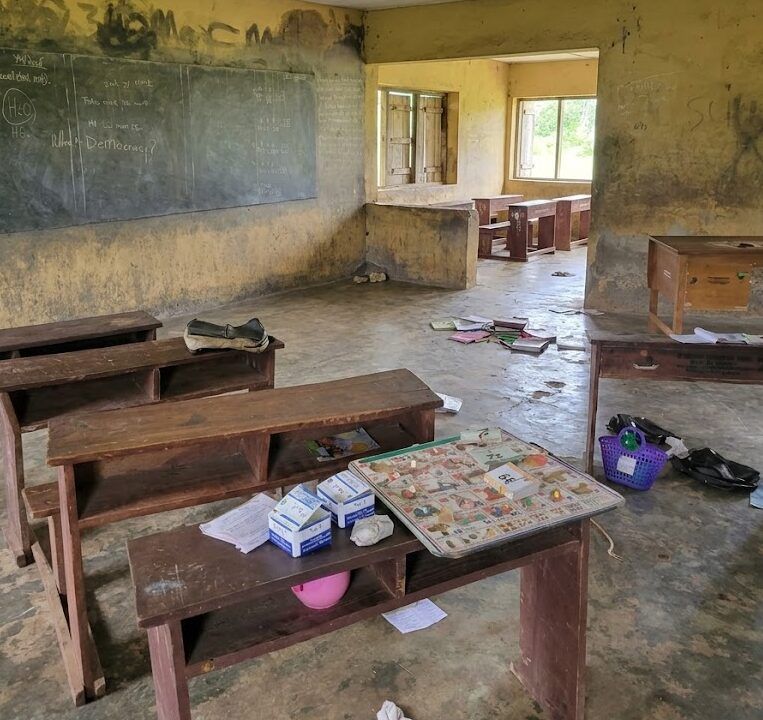
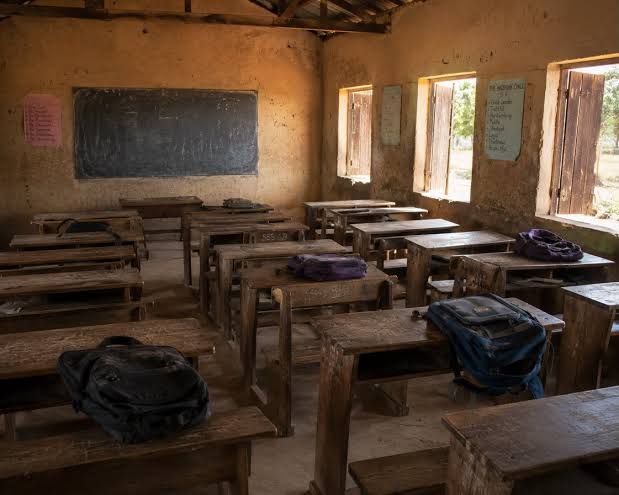
Indeed, a January 2026 investigation reported that students in some Oyo public schools were still learning in unsafe and dilapidated classrooms despite a reported ₦9.97 billion school-renovation contract approved by the state government in 2025. The government explained that the renovation was being undertaken in phases. But to the child sitting under a leaking roof, “phased renovation” is not an educational achievement. It is an uncomfortable reality.
In September 2025, another report documented dilapidated infrastructure, blown-off roofs, abandoned classrooms and encroachment at Methodist Secondary Grammar School in Ogbomoso. These are not abstract statistics. They are the physical environments in which Oyo children are expected to learn.
And there is an even bigger problem: learning outcomes. A government may legitimately argue that it has increased access to education. It may point to programmes designed to reduce the number of out-of-school children. It may point to increased funding. But if a child spends six years in primary school and cannot read a simple passage confidently, something has gone terribly wrong.
If a secondary-school graduate cannot express himself adequately, perform basic calculations or demonstrate the knowledge expected at that level, the system has failed him. If parents who can afford it increasingly feel compelled to send their children to private schools because they have lost confidence in public education, the government should not dismiss that sentiment as propaganda. It should investigate it. Where is the accountability?
One of the most troubling aspects of the situation is the apparent disconnect between teachers’ welfare and educational accountability.
Teachers must be paid. They deserve decent salaries, working conditions, training and professional respect. But teachers’ welfare cannot be the beginning and end of education policy. The child must remain at the centre.
A teacher should be able to answer for the progress of his or her pupils. A head teacher should be accountable for the academic environment of the school. Education administrators should be evaluated by the performance of the schools under their supervision. There must be consequences for persistent failure, and recognition for exceptional performance.
What we cannot build is a system where everybody is paid but nobody is seriously accountable for whether children are learning. The answer is not to punish teachers indiscriminately. It is to create a professional system in which good teaching is rewarded, weak teaching is strengthened through training and persistent incompetence is confronted.
Then, there is the overcrowding problem. This is why Senator Sarafadeen Abiodun Alli, the APC governorship candidate for 2027, has put class size at the centre of his education agenda. Alli has proposed that no primary or secondary school classroom in Oyo State should have more than 30 pupils. He has also promised free learning materials and increased funding for schools. His argument is straightforward: a teacher cannot reasonably provide quality individual attention to 70 or 100 pupils in one classroom.
This is not merely a campaign slogan. It addresses one of the fundamental weaknesses of public education: you cannot achieve quality learning in a permanently congested classroom. A child who struggles with reading can easily disappear in a class of 80 pupils. A child who does not understand mathematics can remain unnoticed. A teacher who is overwhelmed by numbers can spend most of the lesson trying to maintain order rather than teaching effectively.
Reducing class size will not, by itself, solve Oyo’s education crisis. But it is a serious starting point. And that is the kind of conversation Oyo needs; a conversation about measurable outcomes rather than political cosmetics.
What happens if Makinde’s model continues? This brings us to the 2027 governorship election. Oyo people are being presented with two fundamentally different choices. On one side is continuity. On the other is the possibility of a deliberate departure from the status quo.
Bimbo Adekanmbi, the Allied Peoples Movement’s governorship candidate, and the major beneficiary of Makinde’s godfatherism, is not hiding his relationship with the present administration’s political direction. He has publicly pledged to build on and consolidate the achievements of Governor Seyi Makinde if elected. The pledge covers the broader Makinde agenda, including infrastructure, healthcare, agriculture, security and workers’ welfare.
Makinde himself has publicly backed Adekanmbi as his preferred successor and described his candidacy in terms of “Omituntun 3.0.” Unequivocally, this is rot in learning and infrastructure slated to continue in Oyo State! And this should worry anybody who believes Oyo’s education system requires fundamental reform. Because if the diagnosis is that education is doing wonderfully under Makinde, then continuity makes sense. But since the diagnosis is that public education requires a major overhaul, then continuing the same trajectory will sound a death knell for education in Oyo.
You cannot promise Oyo voters a new educational future while simultaneously promising to consolidate the very administration whose educational record is being questioned. That is the contradiction.
Adekanmbi may be an accomplished individual and may have his own ideas. But politically, he has chosen to associate his candidacy with the continuation of Makinde’s programme. He should therefore be prepared to answer a simple question: What exactly would he do differently in education? Would he reverse the weaknesses in the existing system? Would he introduce independent assessment of learning outcomes? Would he publish school-by-school performance data? Would he tackle overcrowding? Would he establish a transparent maintenance programme for school infrastructure? Would he ensure that every public primary-school child can read and write before leaving primary school? Would he subject education officials to measurable performance targets? Or would he simply continue the same policies under a new name? Oyo voters deserve clear answers.
This is where Senator Sarafadeen Alli has distinguished himself. He has provided answers to these questions even before concerned Oyo citizens would ask. His education proposal of a maximum of 30 pupils per classroom, free learning materials and increased school funding provides a basis for a broader educational reform agenda.
And Alli will go further. He will convince sceptical parents, teachers and students by committing to publish an annual Oyo Education Performance Index.
Every year, parents should be able to see:
– the literacy rate of primary-school pupils;
– numeracy performance;
– WASSCE and NECO performance;
– pupil-teacher ratios;
– teacher vacancies;
– classroom conditions;
– school attendance;
– dropout rates;
– out-of-school figures;
– infrastructure needs;
– funds allocated to each local government;
– and what each naira spent on education achieved.
These would represent a fundamental change from education as political announcement to education as measurable public service.
Alli will also make teacher development central to his programme. Oyo cannot achieve educational excellence by simply building classrooms. Teachers must be trained continuously, properly equipped and professionally motivated.
And schools will be safe under Alli’s administration. The recent abductions of pupils and teachers in Oyo have demonstrated that security is now inseparable from education. A parent who fears that sending a child to school could expose that child to kidnapping cannot be expected to have confidence in the education system.
Alli’s education policy will therefore incorporate school security, safe transportation and emergency preparedness.
Oyo once stood for educational excellence. There was a time when Oyo State, and Ibadan in particular, was synonymous with educational excellence. The old Western Region built a reputation around mass education. Generations of Nigerians passed through schools in the region and went on to become academics, doctors, engineers, lawyers, administrators, writers and political leaders.
Oyo inherited that tradition. What happened to it? Why should a state with such a distinguished educational history be discussing classrooms without roofs, overcrowded schools, inadequate facilities and poor learning outcomes in the 2020s?
Why should parents have to make enormous financial sacrifices to send their children to private schools because they no longer have sufficient confidence in public education? Why should a teacher’s greatest concern be that his salary arrives while nobody asks whether his pupils are learning?
These questions are bigger than Seyi Makinde. But they are questions Sarafadeen Alli is poised to tackle. The 2027 election should therefore not merely be about personalities, ethnic calculations, political godfathers or slogans. It should be about the direction of the state. Oyo is not satisfied with the present direction, and it cannot choose continuity.
Oyo’s public education system is in need of fundamental repair, and voters must ask whether the person promising to continue the present administration’s trajectory is really the person capable of fixing it. You cannot repair a broken education system by promising to preserve the status quo. That is why the educational question should be central to the 2027 governorship election.
Senator Sarafadeen Alli is offering himself as an alternative. His promise of smaller classes, free learning materials and increased education funding is a useful beginning. And he will go further and make educational accountability one of the defining principles of his campaign.
Oyo will have a governor in Alli who will ask not merely: “How much did we spend on education?” but: “What did the child learn?”
That is the question Makinde’s government has not answered convincingly enough after more than seven years. And it is precisely why the people of Oyo State should be wary of a succession plan built around “Omituntun 3.0.” If the water has not washed away the rot in education in 1.0 and 2.0, changing the number to 3.0 will not make the classroom any better.
Oyo needs a new educational direction, not merely a new political custodian of the old one. The state needs to repair its schools, restore confidence in public education, reduce overcrowding, improve teaching quality, measure learning outcomes and make every naira invested in education answerable to the child.
The choice in 2027 should therefore be clear: continuity without fundamental change, or a deliberate attempt to rebuild Oyo’s educational system. For those who believe the system is broken, Senator Sarafadeen Alli’s promise of reform deserves serious consideration. The future of Oyo State is sitting in those classrooms. And that future cannot afford another eight years of failures and excuses.


Leave a Reply